You don’t need a leg press machine or a full squat rack to build strong, defined legs. Training your lower body using just a pair of dumbbells is one of the most effective and versatile ways to increase strength, improve balance, and stimulate muscle growth. Whether you train in a compact home gym, a small apartment, or a busy commercial setting, a dedicated dumbbell leg workout is a great way to conquer leg day.
This comprehensive guide breaks down dumbbell leg training, provides multiple workout routines for different goals, and highlights how gym organization ensures your training is safe and seamless.
Advantages of Dumbbell Leg Workouts
When it comes to home leg workout routines, dumbbells offer distinct advantages over barbells or machines:
-
Improved Stabilization: Dumbbells force each leg to work independently and require your core and stabilizer muscles to fire constantly, translating to better functional strength.
-
Fixing Imbalances: Dumbbells prevent a stronger leg from compensating for a weaker one, allowing you to train unilaterally (one side at a time) and correct muscle imbalances more effectively.
-
Versatility in Small Spaces: Dumbbell exercises have countless variations, from goblet squats to Bulgarian split squats, that can be performed with minimal space. This is a massive advantage for anyone exercising in a small home gym.

Leg Dumbbell Workouts: Choose Your Goal
Instead of a one-size-fits-all routine, choose the workout below that aligns with your current fitness goal, whether that's building size or improving muscular endurance.
Leg Workout Option 1: Muscle Growth
This routine uses moderate-to-heavy weight and focuses on time under tension and isolation to maximize muscle breakdown and growth. Complete 3 to 4 sets for each exercise, resting 60–90 seconds between sets.
-
Dumbbell Goblet Squat: 8–10 reps. Focus: Quads / Glutes. Use a 3-second descent.

-
Dumbbell Walking Lunges: 10 reps per leg. Focus: Quads / Glutes. Focus on the powerful push-off from the front foot.
-
Dumbbell Romanian Deadlift (RDL): 10–12 reps. Focus: Hamstrings / Glutes. Hinge at the hips; feel the stretch.

-
Dumbbell Glute Bridge/Hip Thrust: 15–20 reps. Focus: Glutes (Isolation). Hold the peak contraction for 1 second.
-
Dumbbell Calf Raise (Standing): 15–20 reps. Focus: Calves. Perform standing on a slight elevation.
Leg Workout Option 2: Strength and Stability
This routine emphasizes unilateral movements to maximize individual leg strength and improve balance and core stability. Complete 3 to 4 sets for each exercise, resting 60–75 seconds between sets.
-
Dumbbell Step-Up: 8 reps per leg. Focus: Glutes / Quads. Use a sturdy box and control the descent.
-
Dumbbell Bulgarian Split Squat: 10 reps per leg. Focus: Quads / Glutes. Back foot elevated on a bench or box.

-
Single-Leg Dumbbell RDL: 8 reps per leg. Focus: Hamstrings / Core. Focus intensely on balancing the off-leg.
-
Dumbbell Sumo Squat: 12–15 reps. Focus: Inner Thigh / Glutes. Use one heavy dumbbell; maintain a wide stance.
Leg Workout Option 3: Endurance and Fat Loss
Perform this workout as a circuit. Complete all exercises back-to-back with minimal rest (15 seconds) between movements. Rest 90 seconds between full circuits, and complete 3 total circuits.
-
Dumbbell Goblet Squat: 15 reps. Focus: Quads / Glutes. Maintain continuous movement throughout the set.
-
Dumbbell Reverse Lunges (Alternating): 20 total reps (10 per leg). Focus: Quads / Glutes. Less stress on the knee joint than forward lunges.

-
Dumbbell Good Morning: 15 reps. Focus: Hamstrings. Use light weight; focus on the hip hinge.
-
Dumbbell Side Lunge: 10 reps per side. Focus: Inner/Outer Thigh. Targets the often-ignored adductors/abductors.
Dumbbell Leg Exercises Technique
Proper technique is non-negotiable for safety and results. Focus on these cues for the foundation of your routine:
-
Dumbbell Goblet Squat: Keep the dumbbell pressed firmly against your chest to maintain an upright torso. Initiate the movement by pushing your hips back, then dropping straight down.
-
Dumbbell Lunges: Ensure your front knee tracks over your ankle (not past your toes) and that your hips remain square to the front. The weight should be evenly distributed across your front foot.
-
Dumbbell RDL: Maintain a soft, fixed bend in your knees throughout the movement. The entire motion should be a hip hinge. Your back angle must remain straight and rigid. Stop when you feel a deep stretch in your hamstrings, not when your back rounds.
Safety & Efficiency: The Role of Synergy Custom Fitness Storage
Any effective leg dumbbell workout relies on quick transitions, constant focus, and a clear workspace. Nothing derails intensity faster than searching for the right dumbbell or tripping over scattered weights. This is where quality, space-saving storage from Synergy Custom Fitness provides a crucial training advantage.

1. Zero Floor Obstruction with Vertical Storage
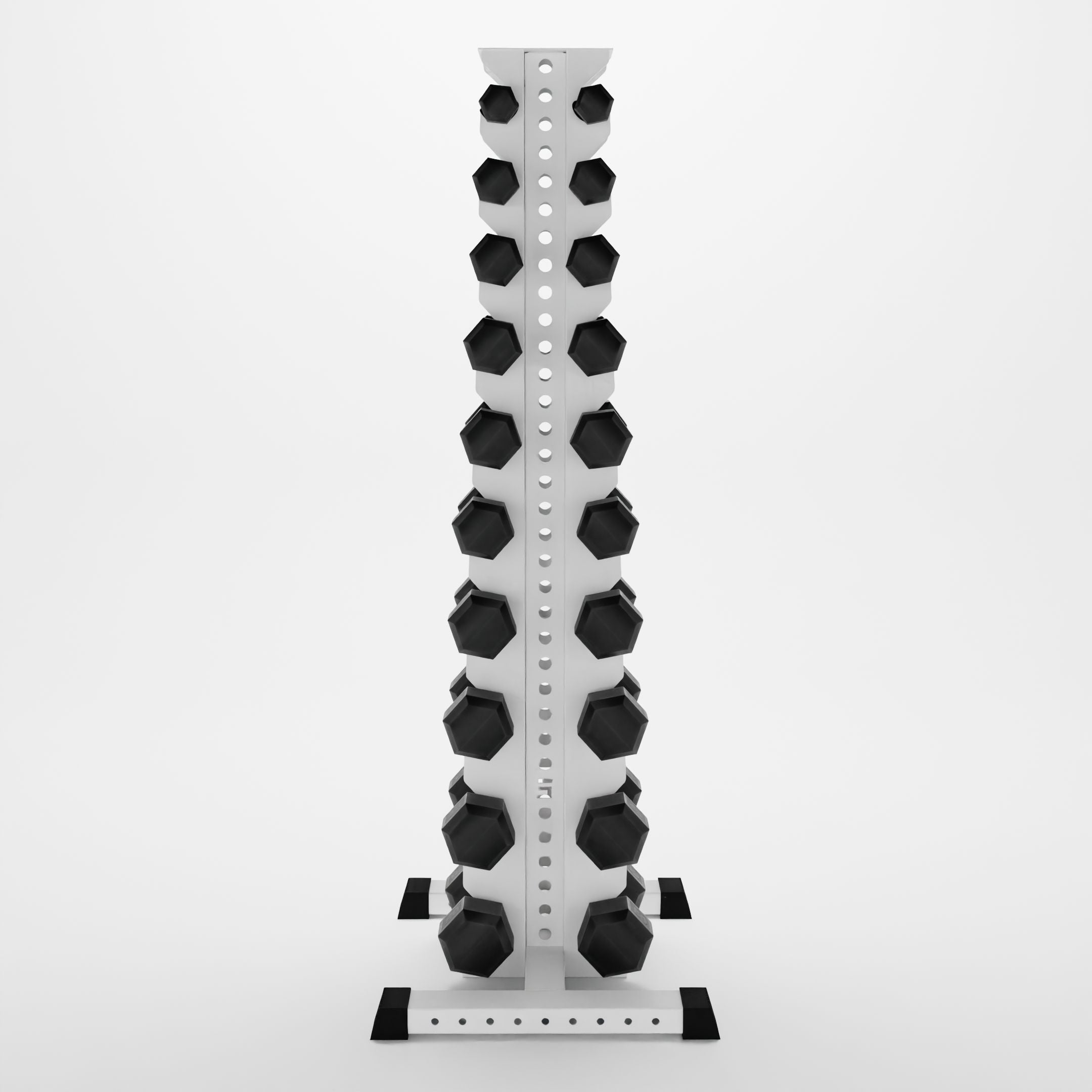
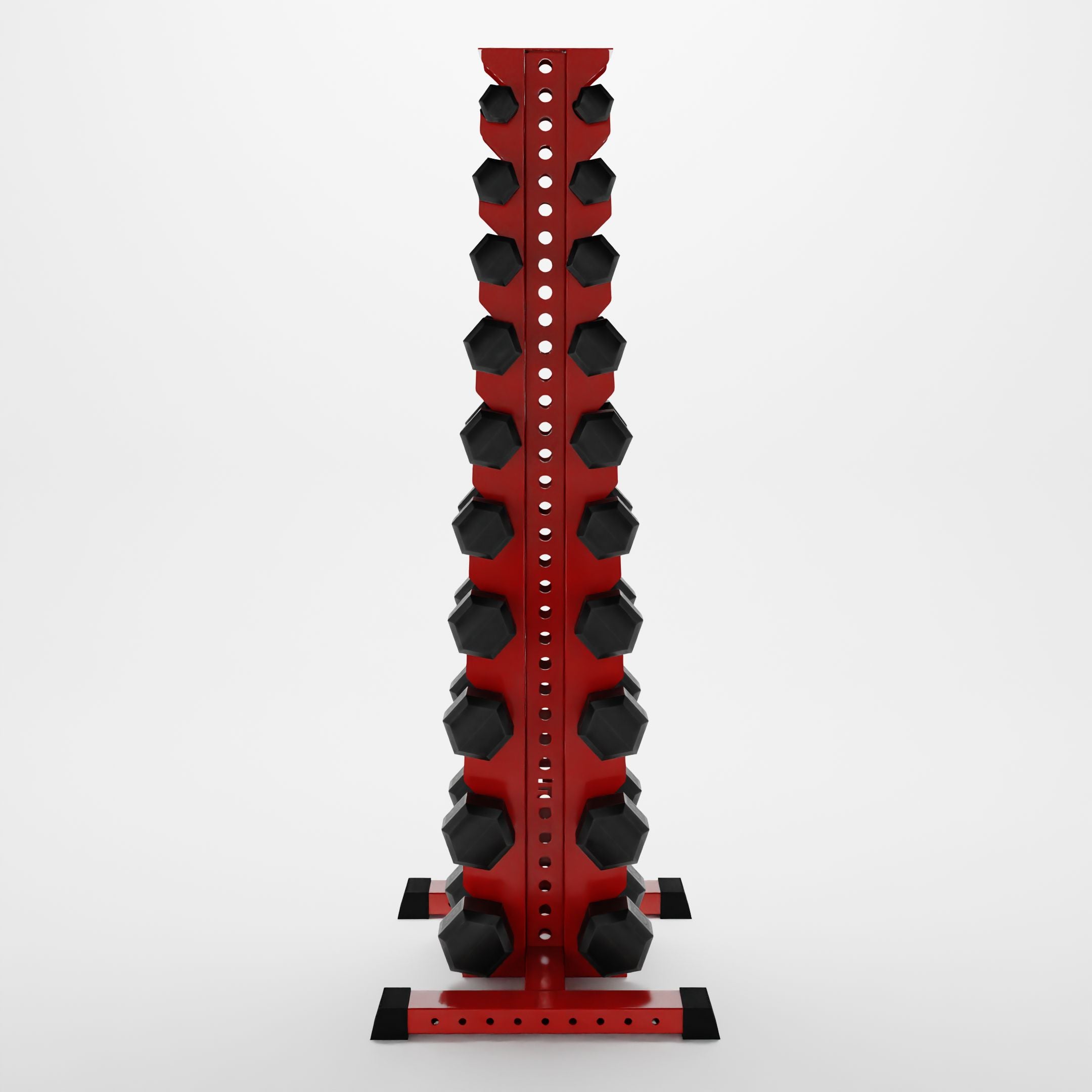
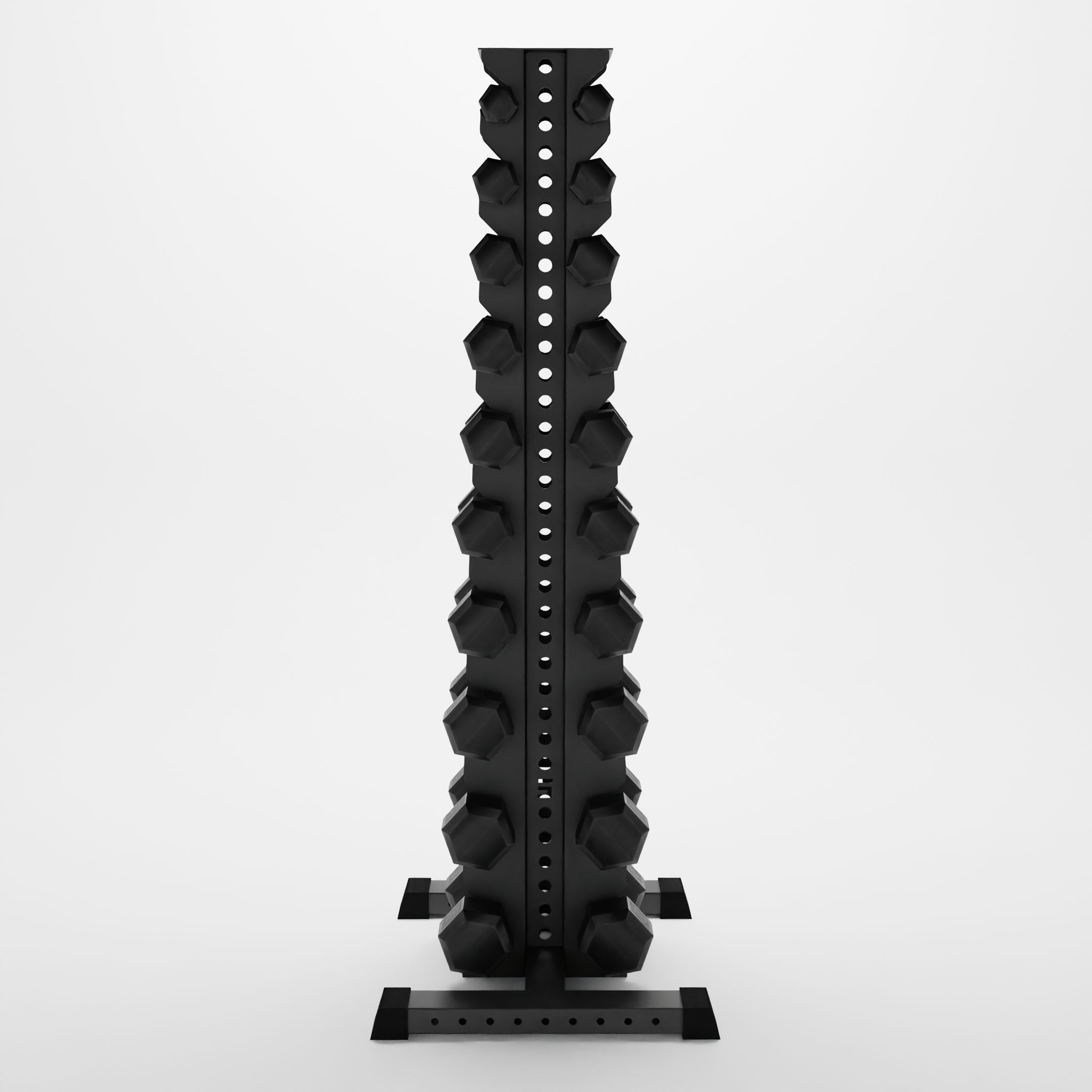
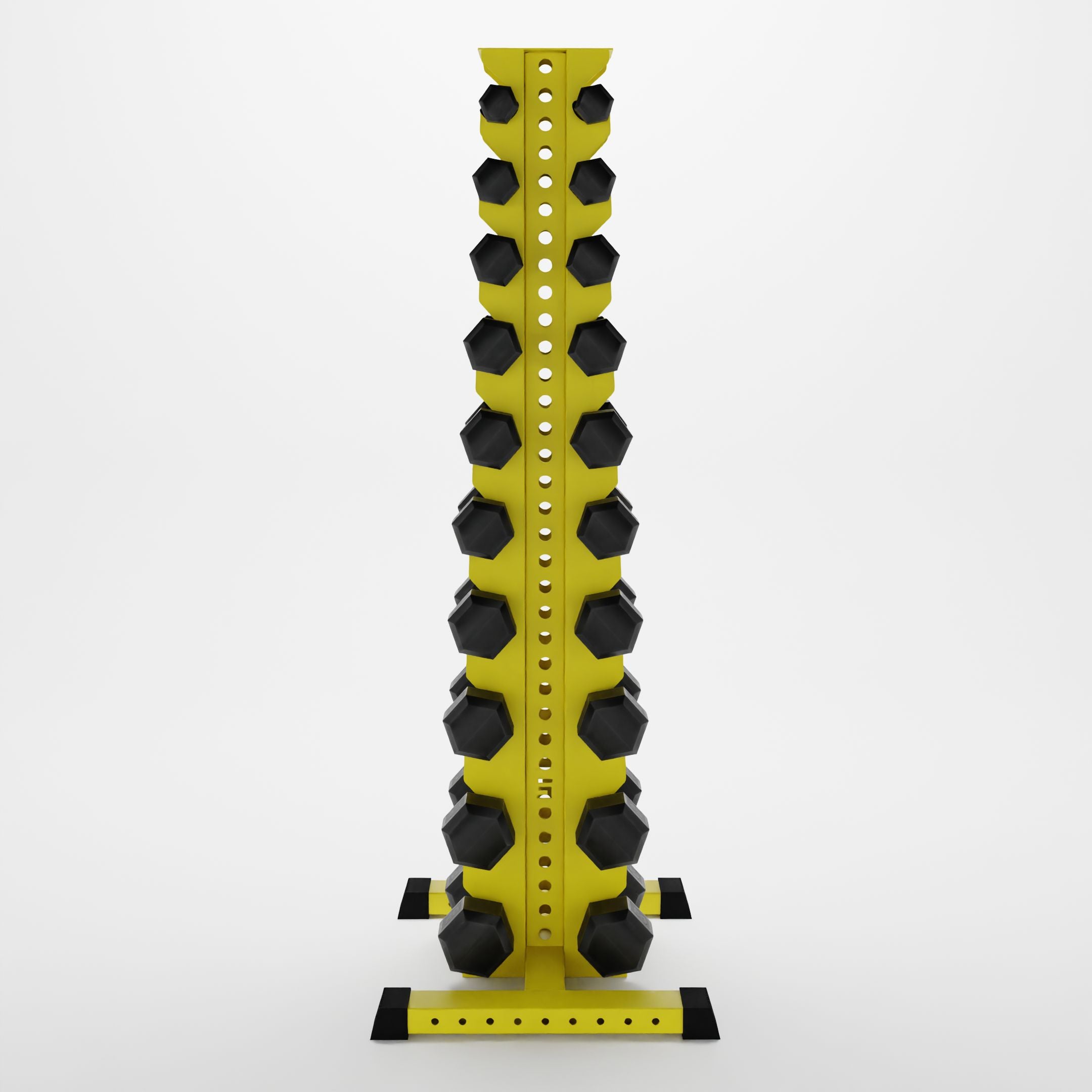
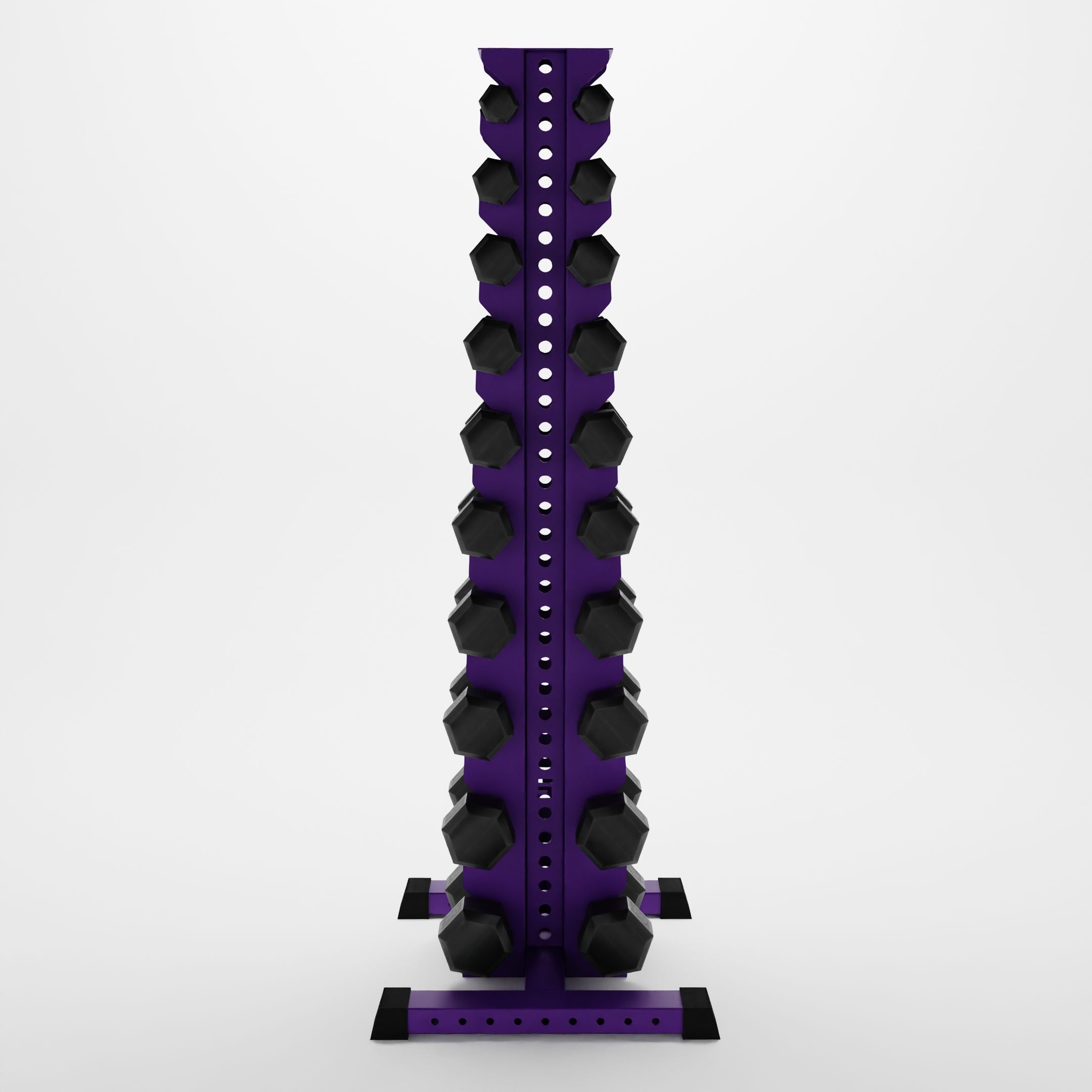
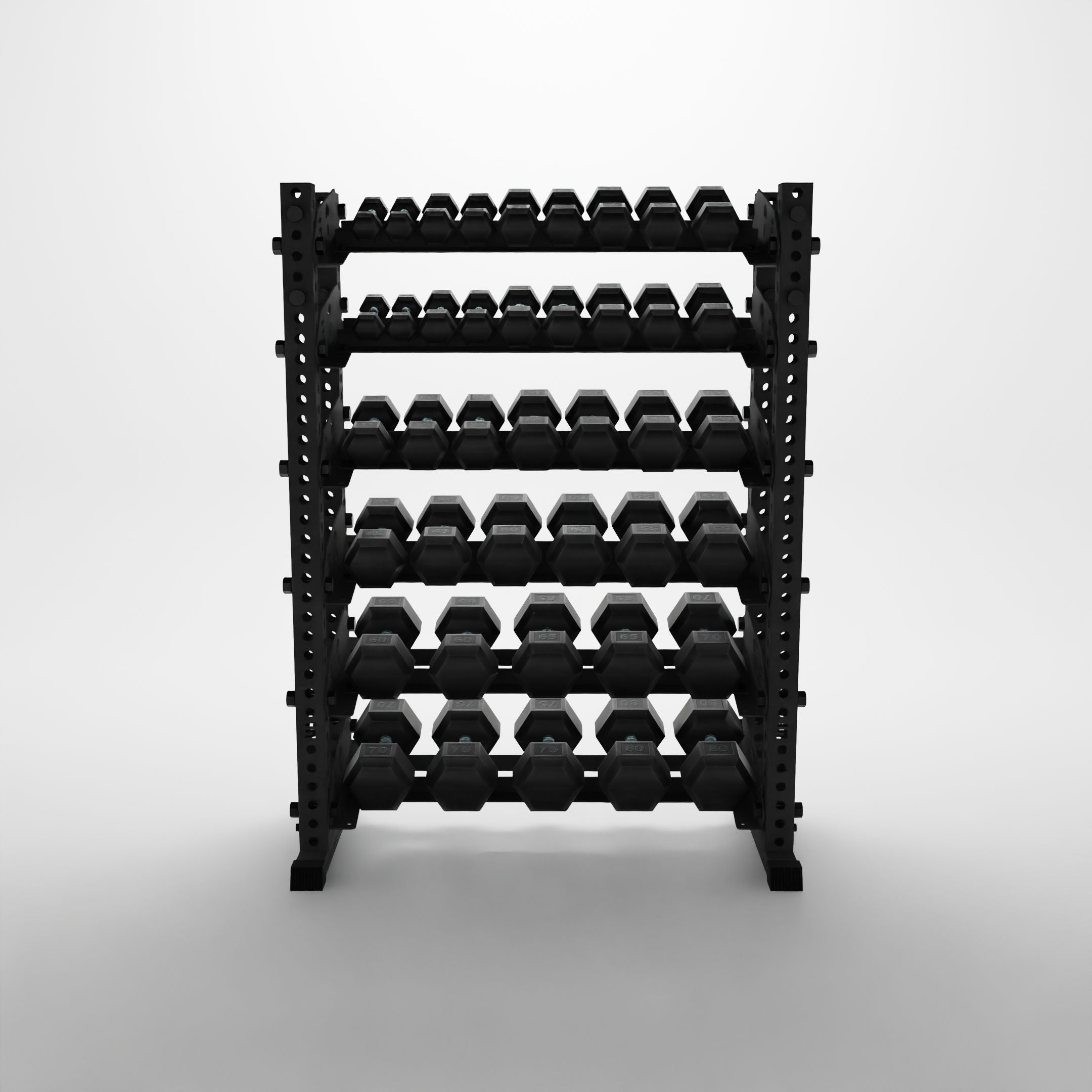
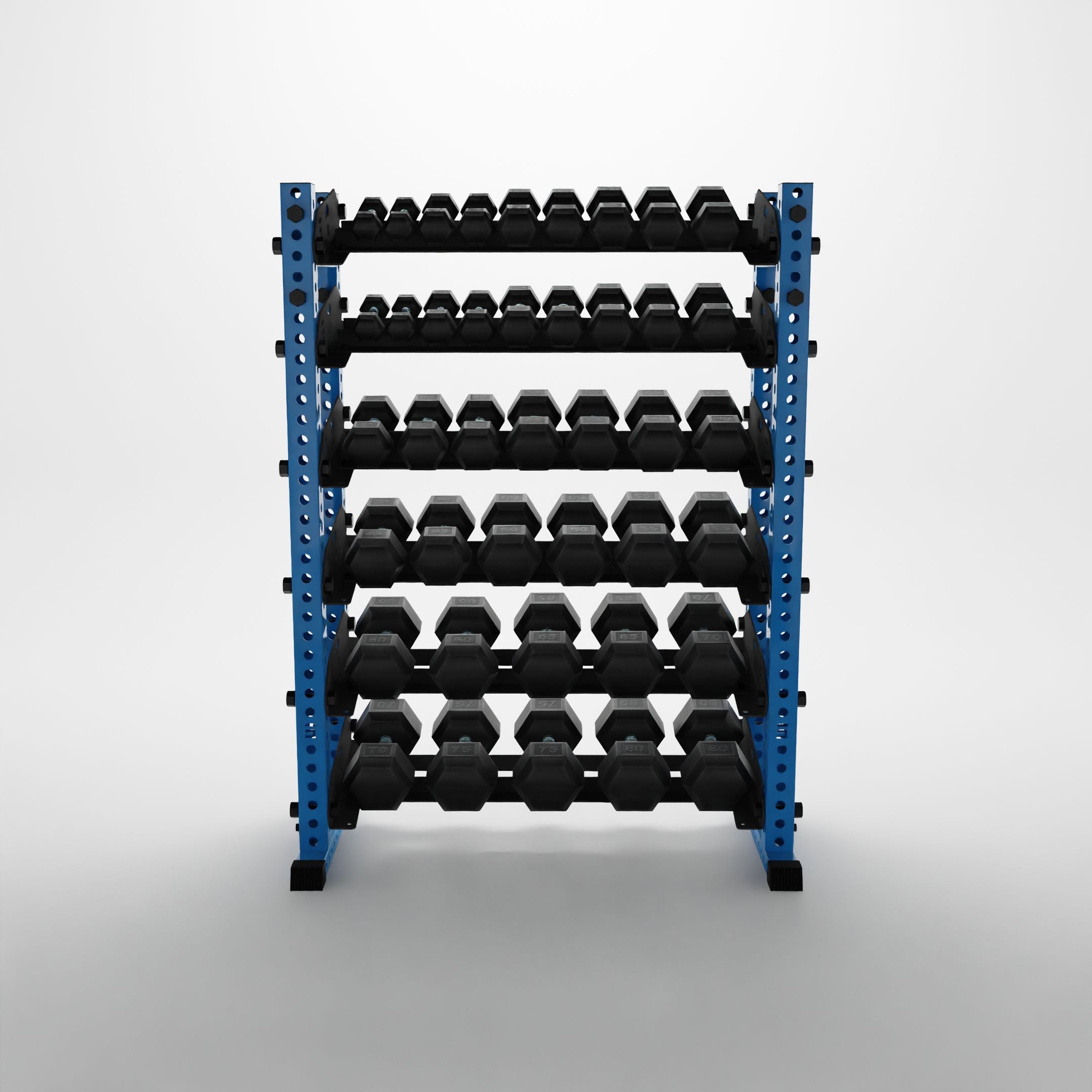
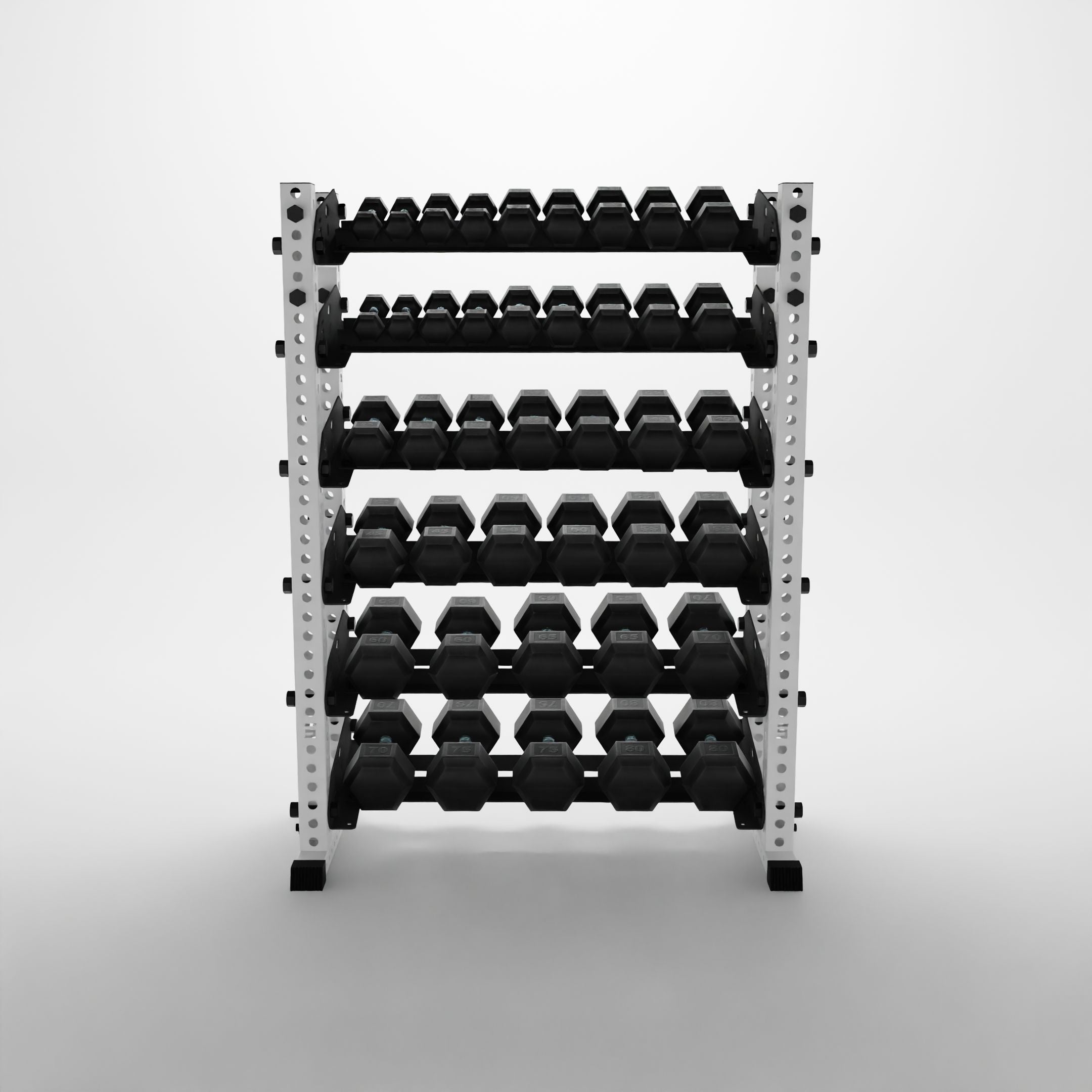
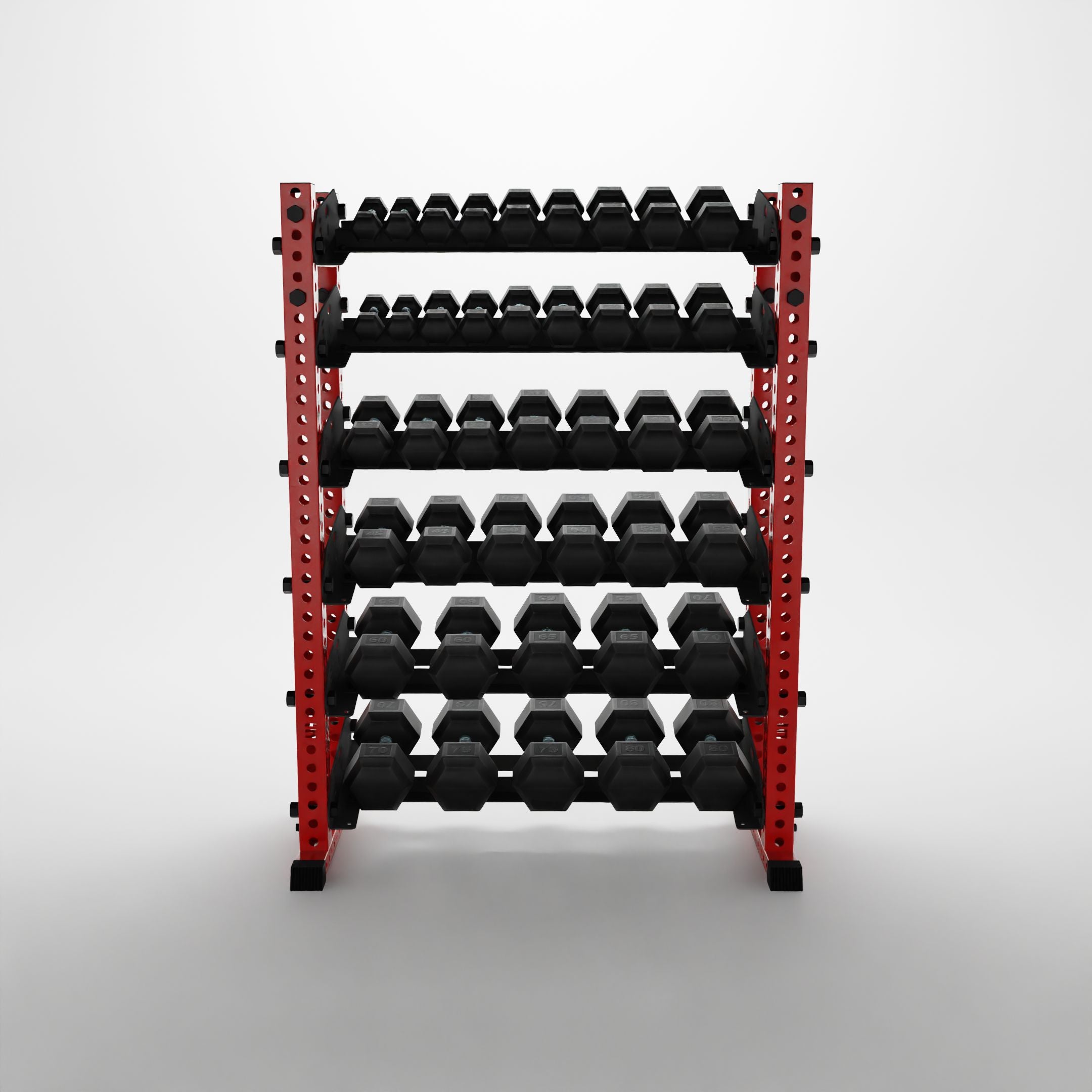
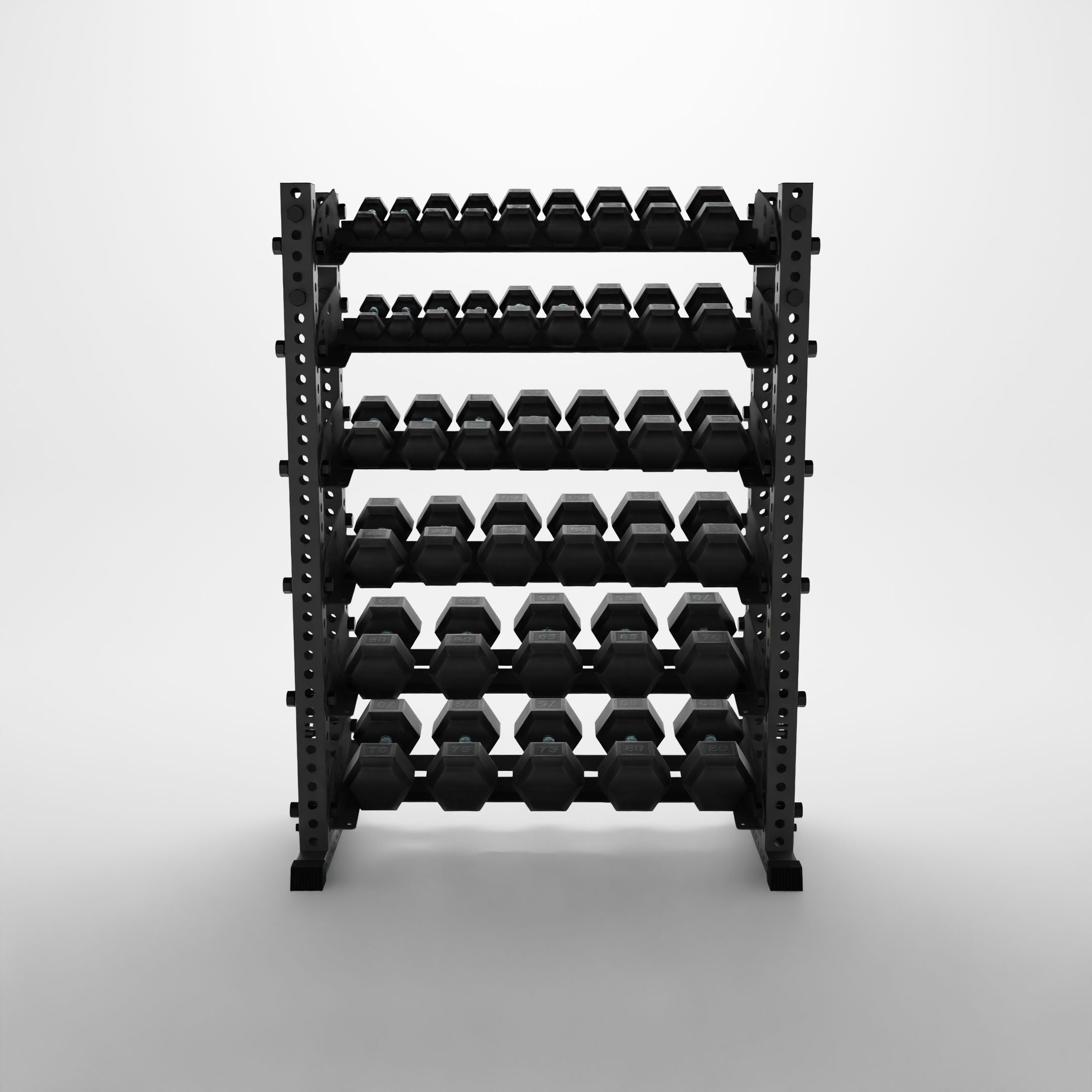
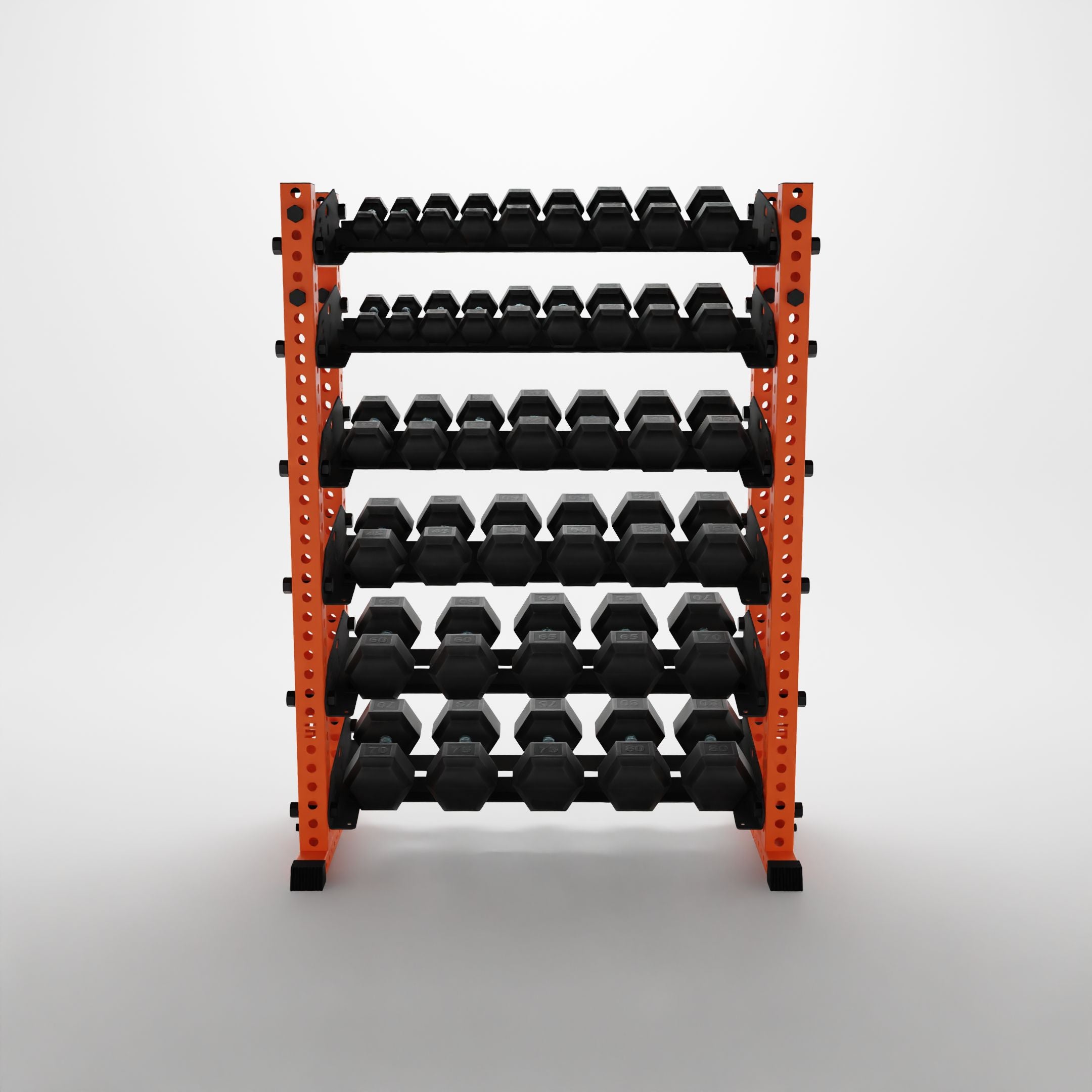
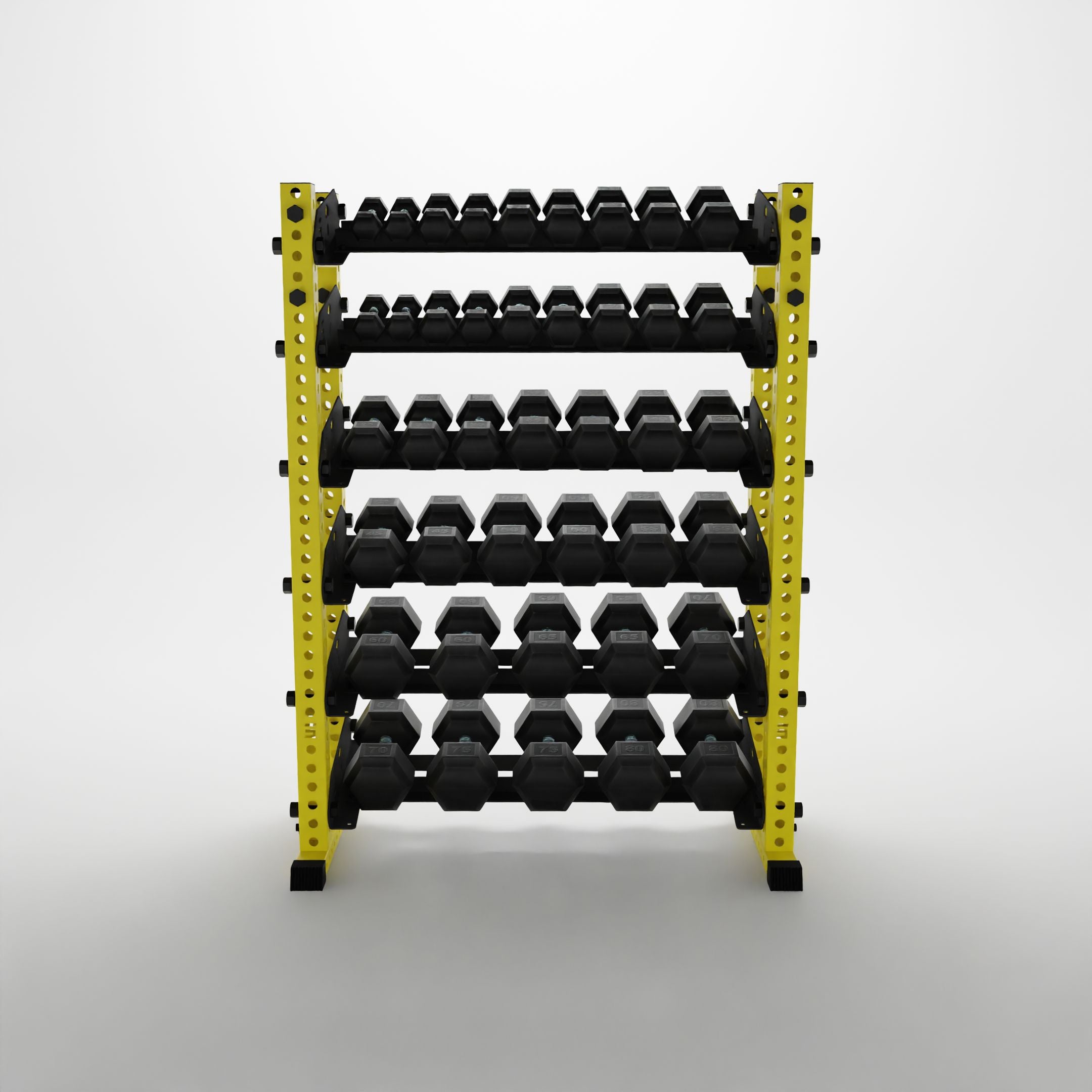
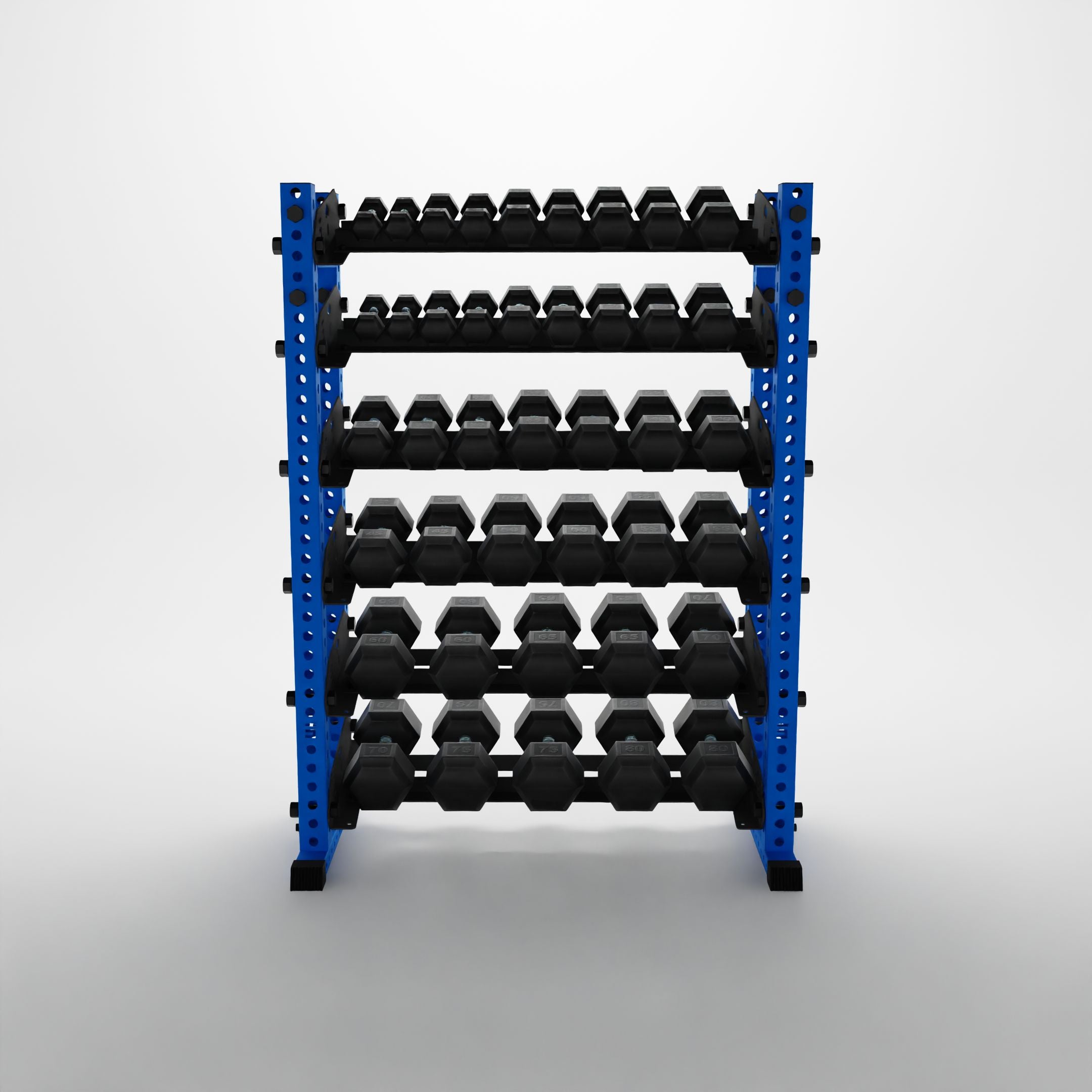
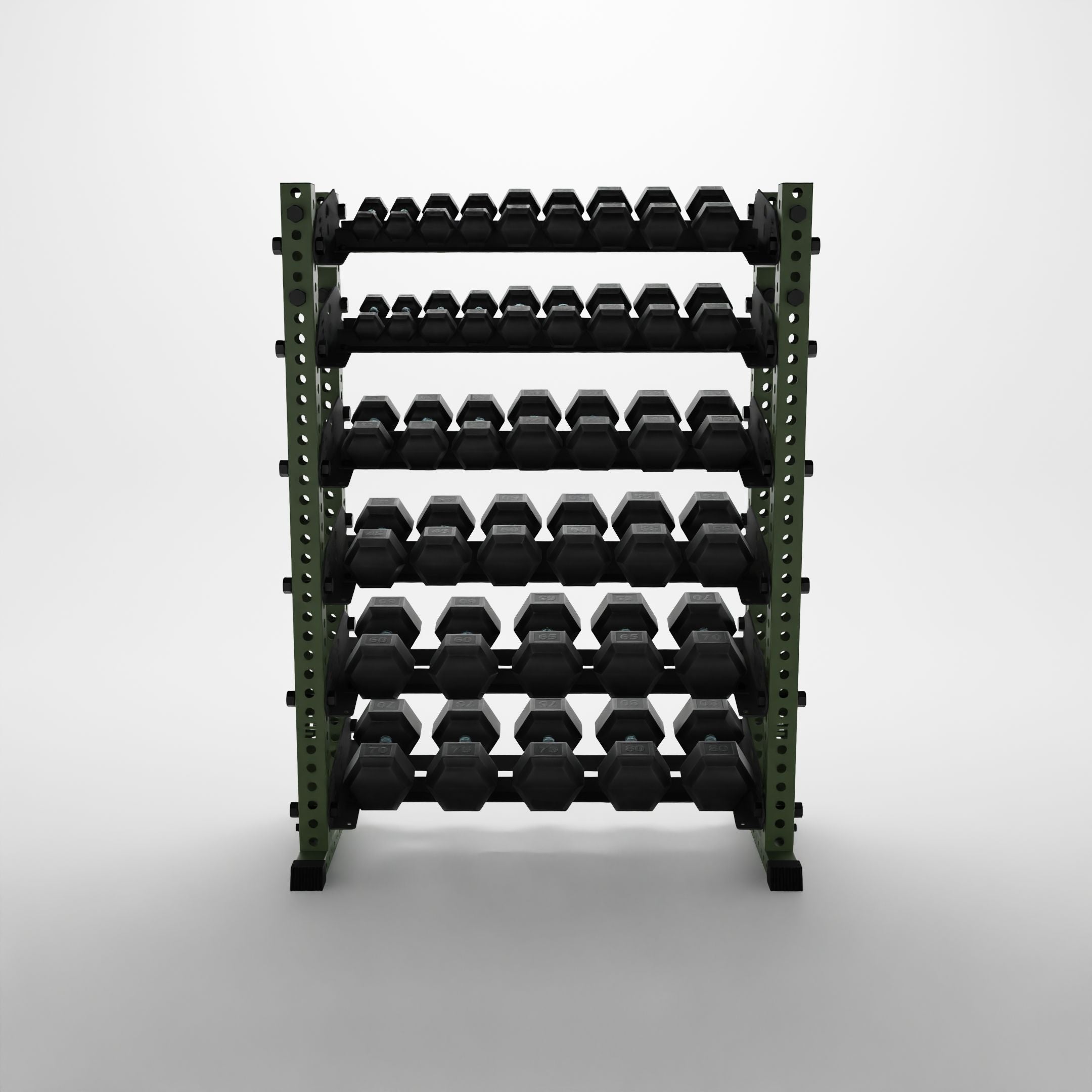
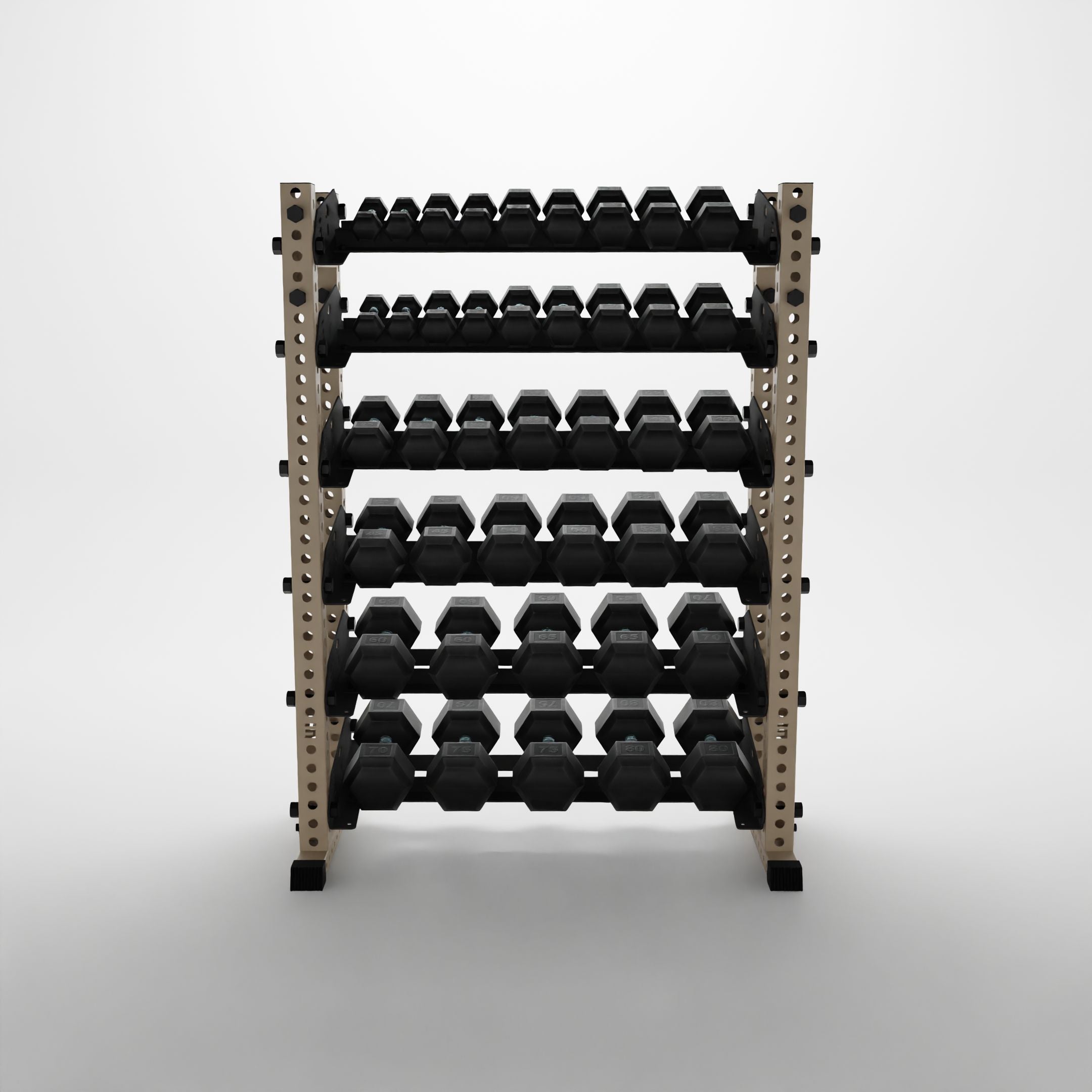
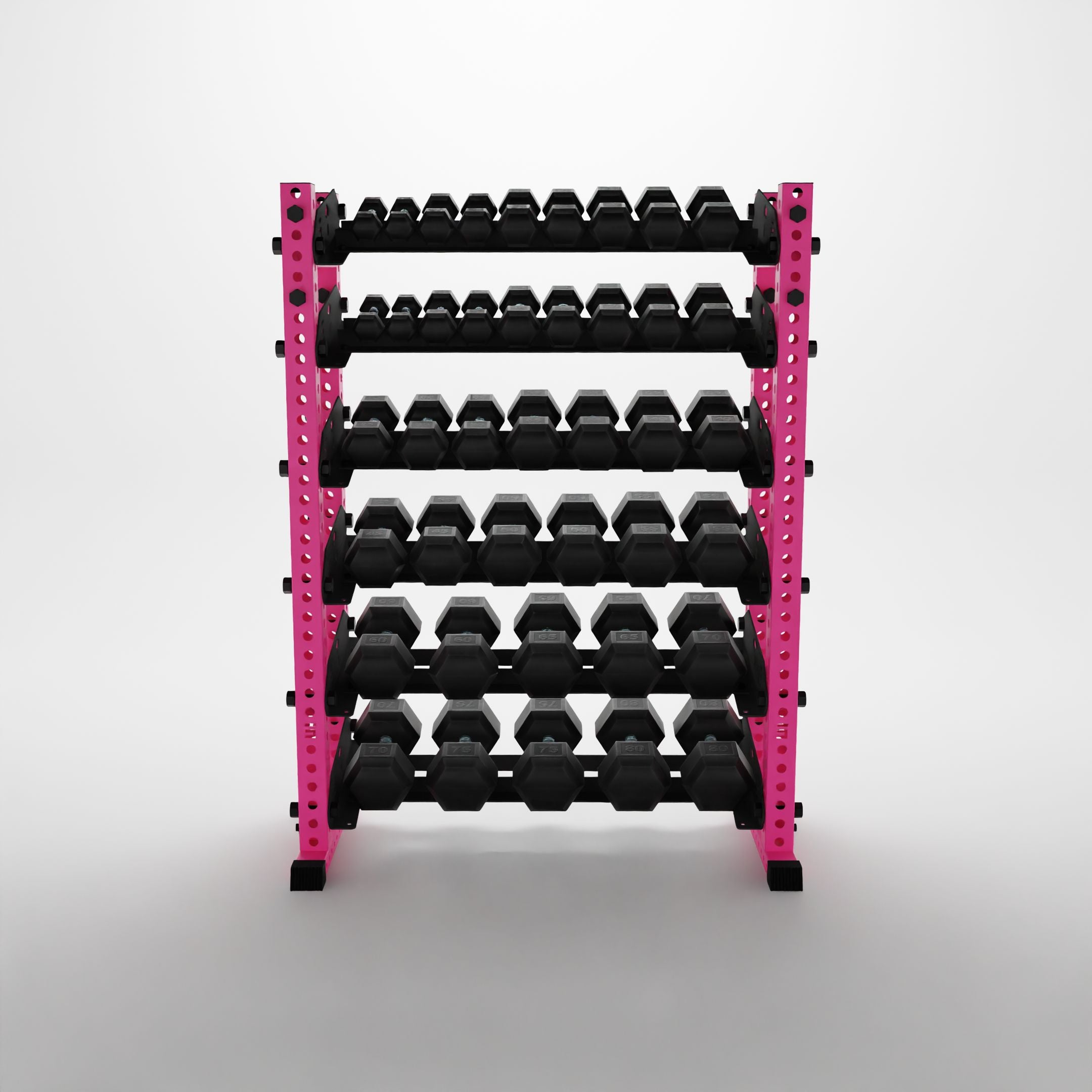
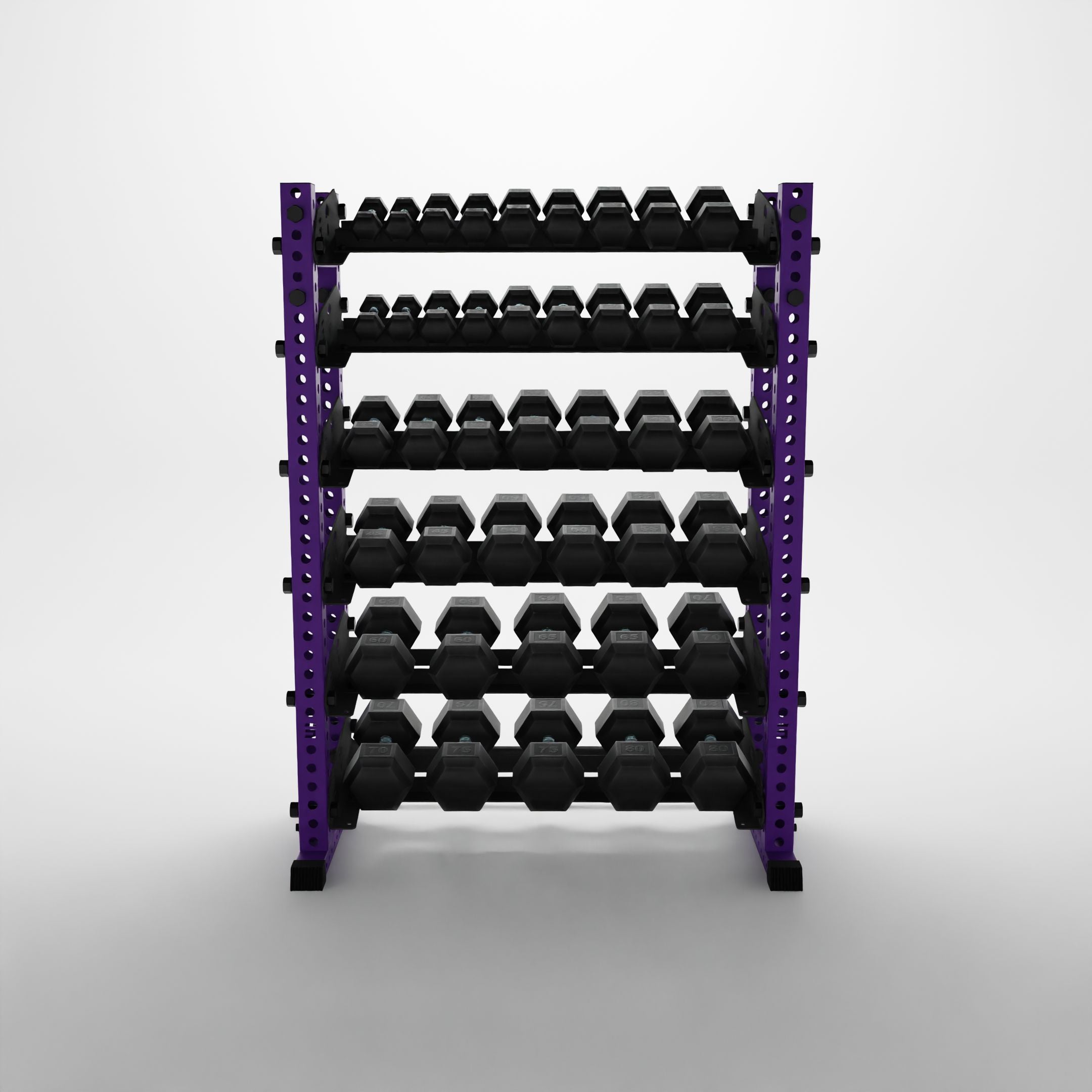
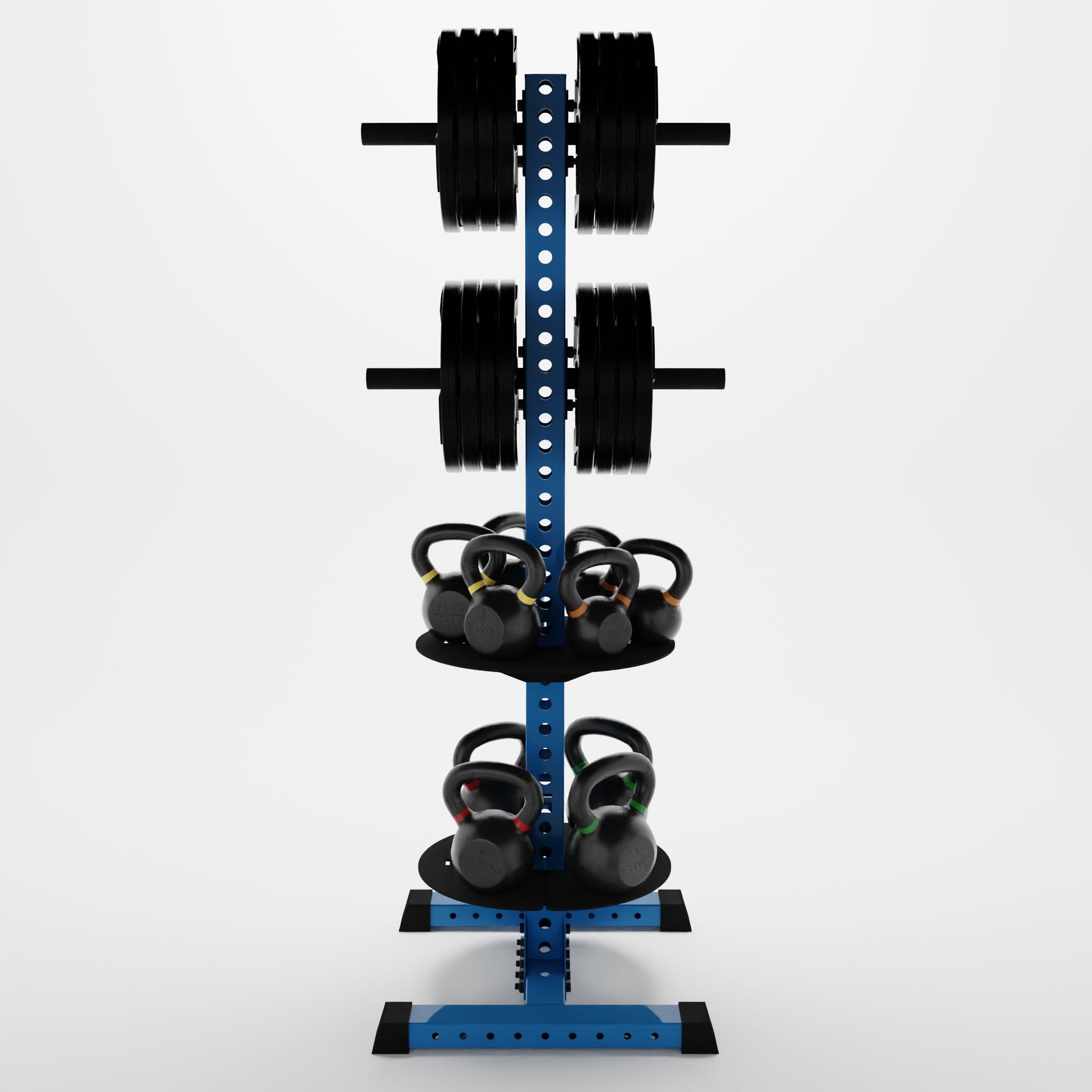
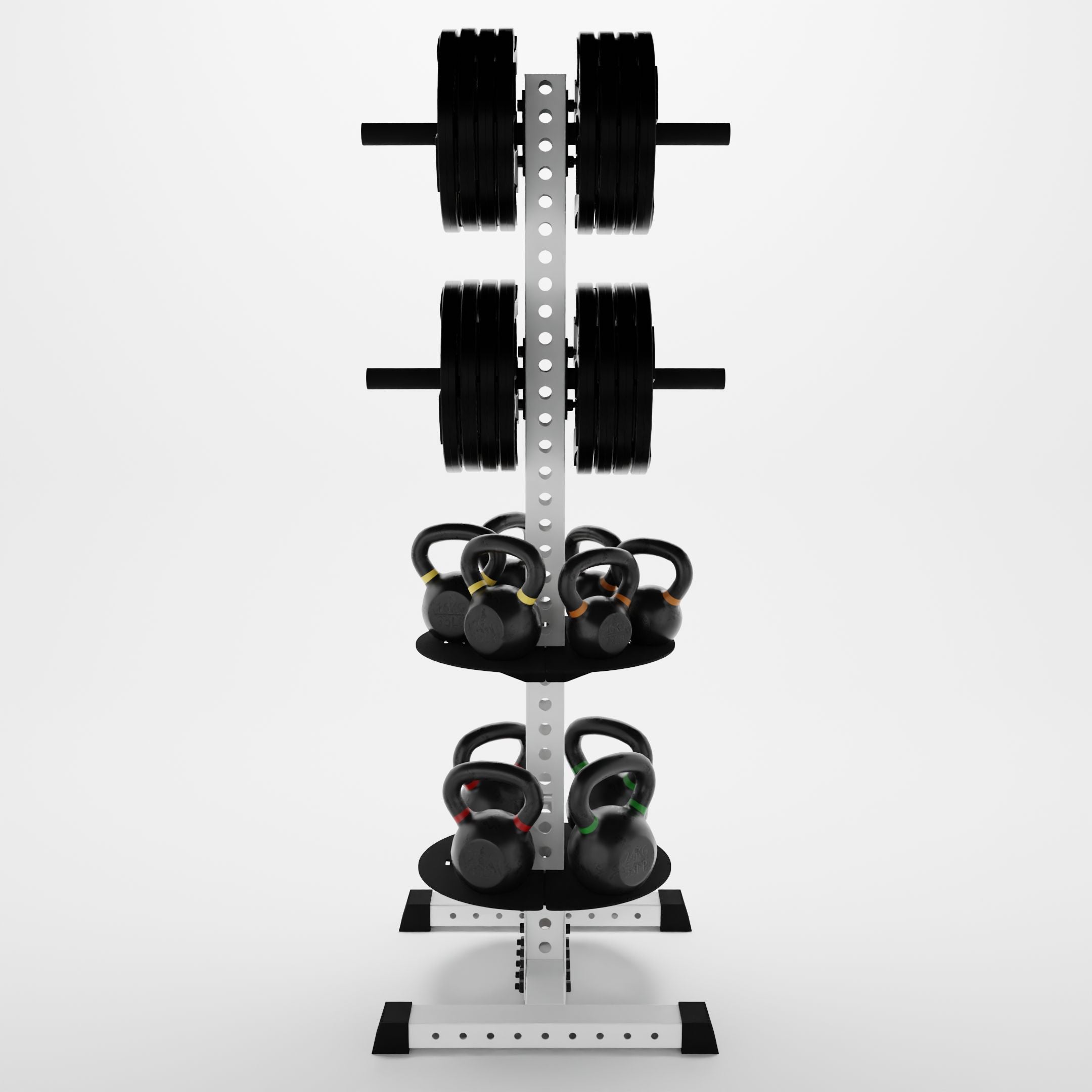
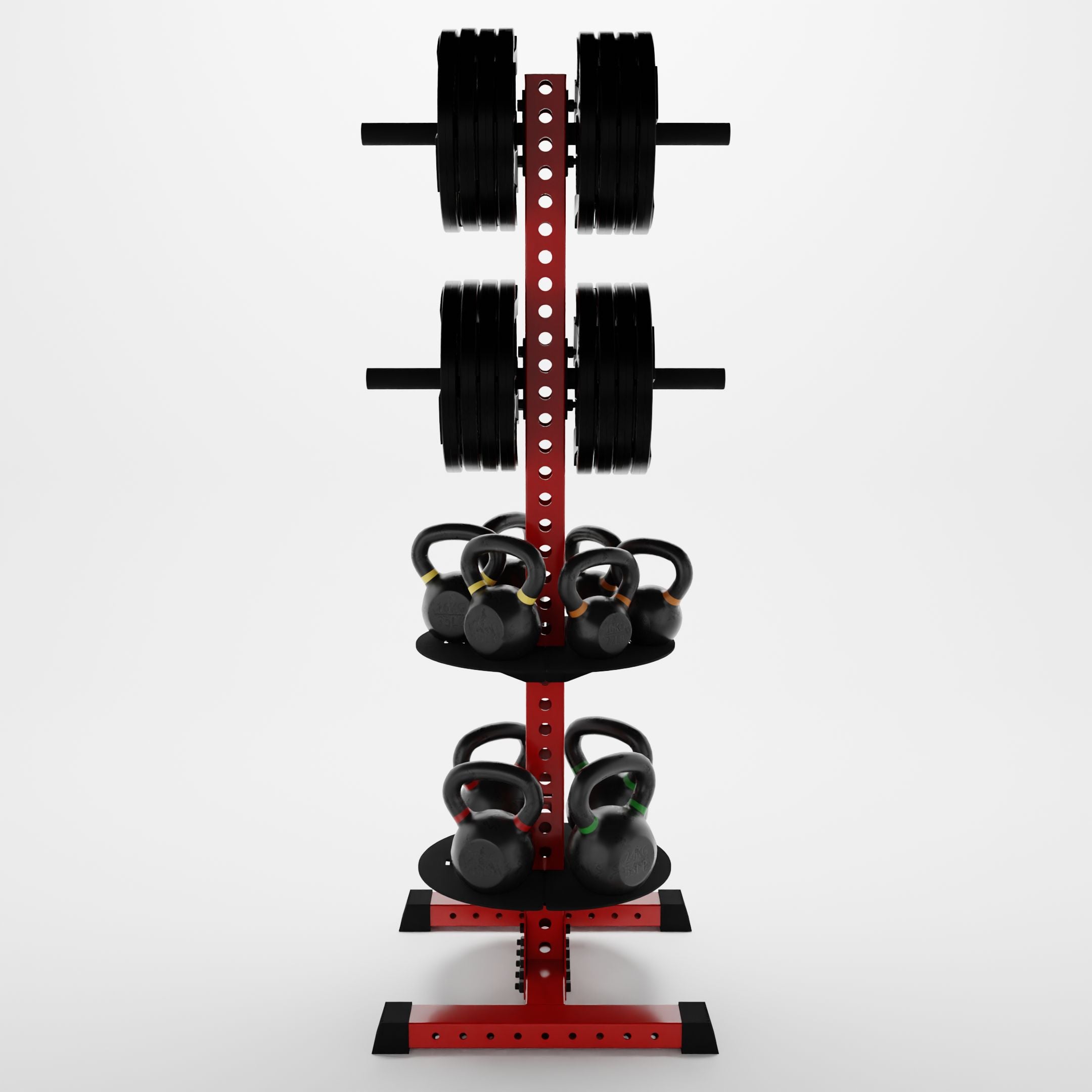
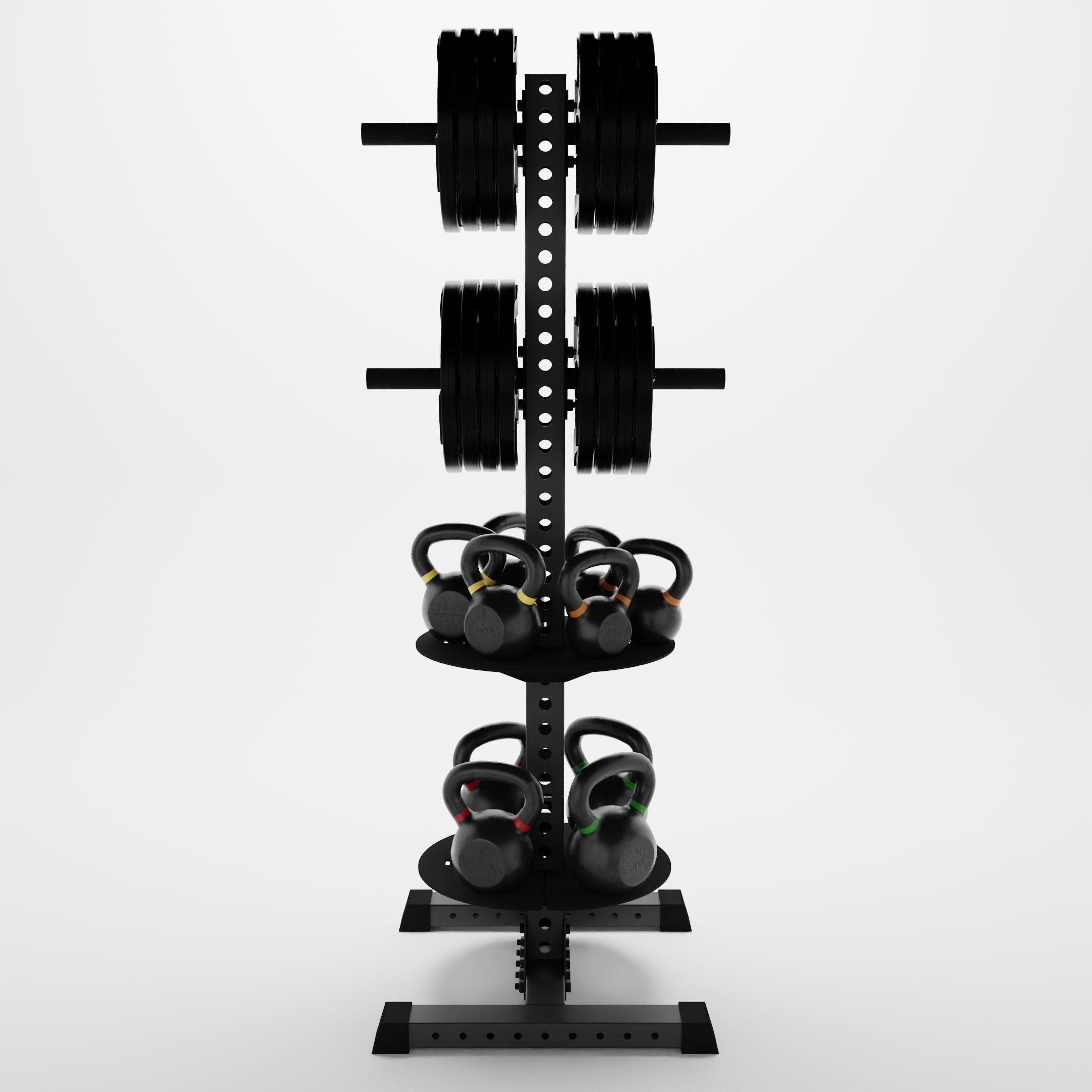
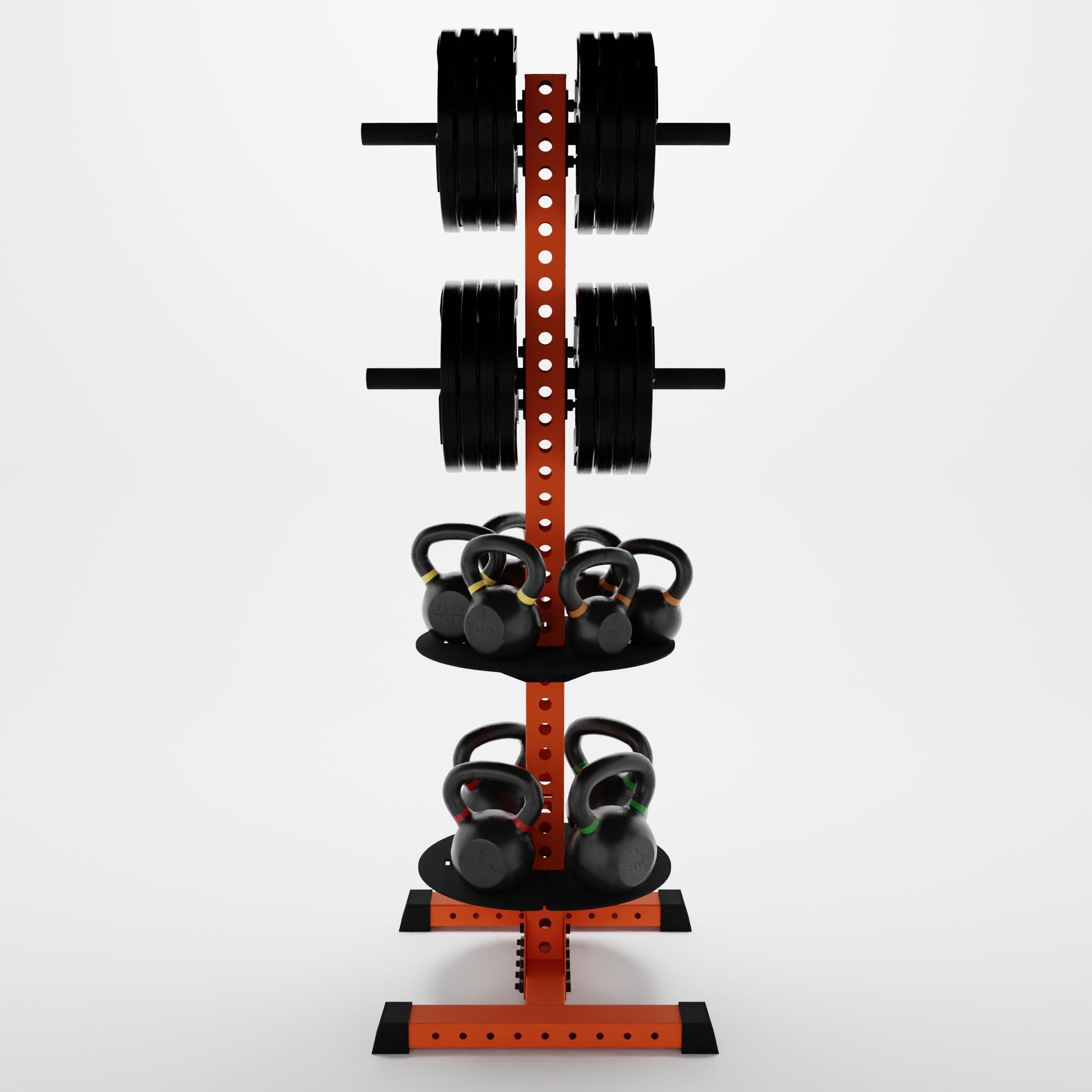
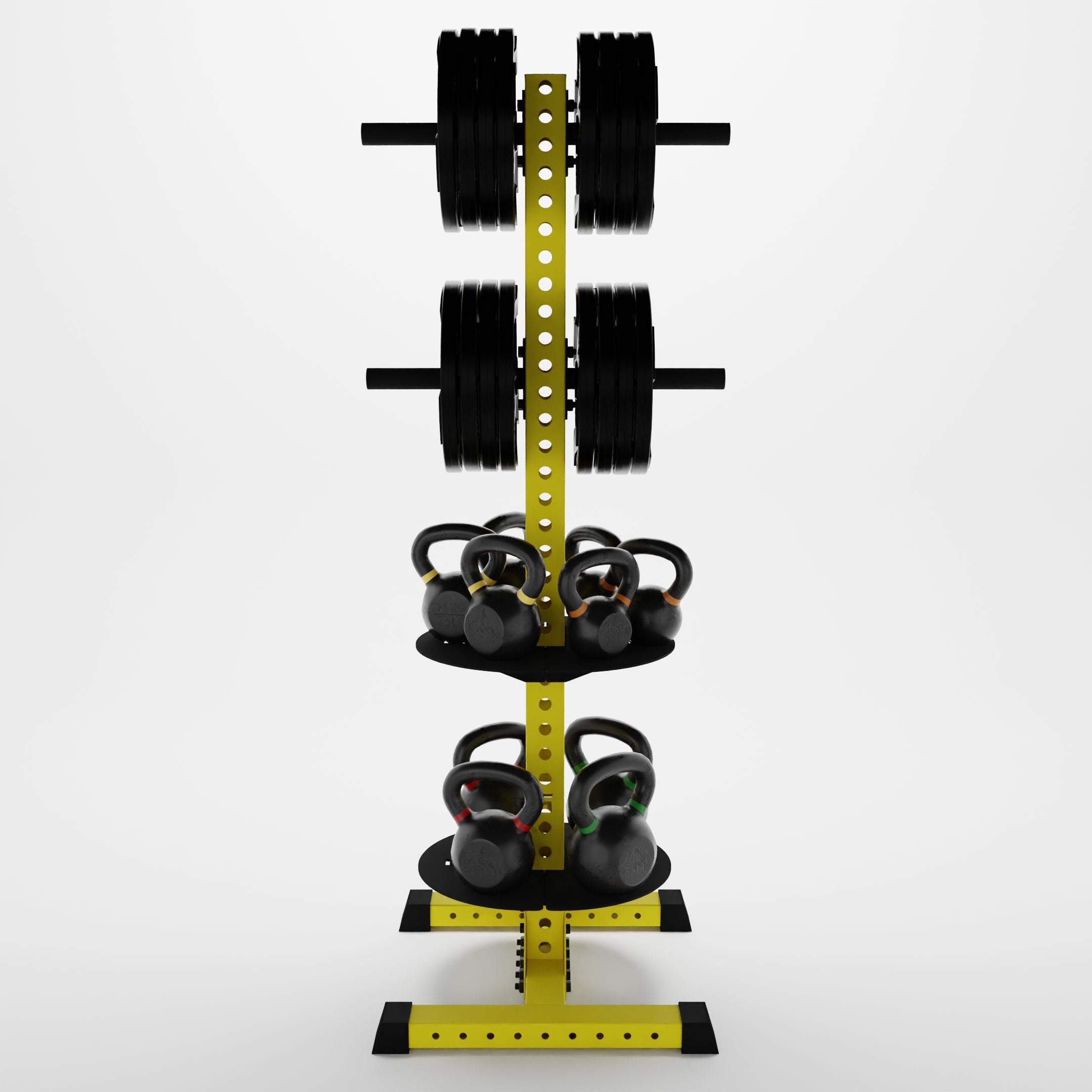
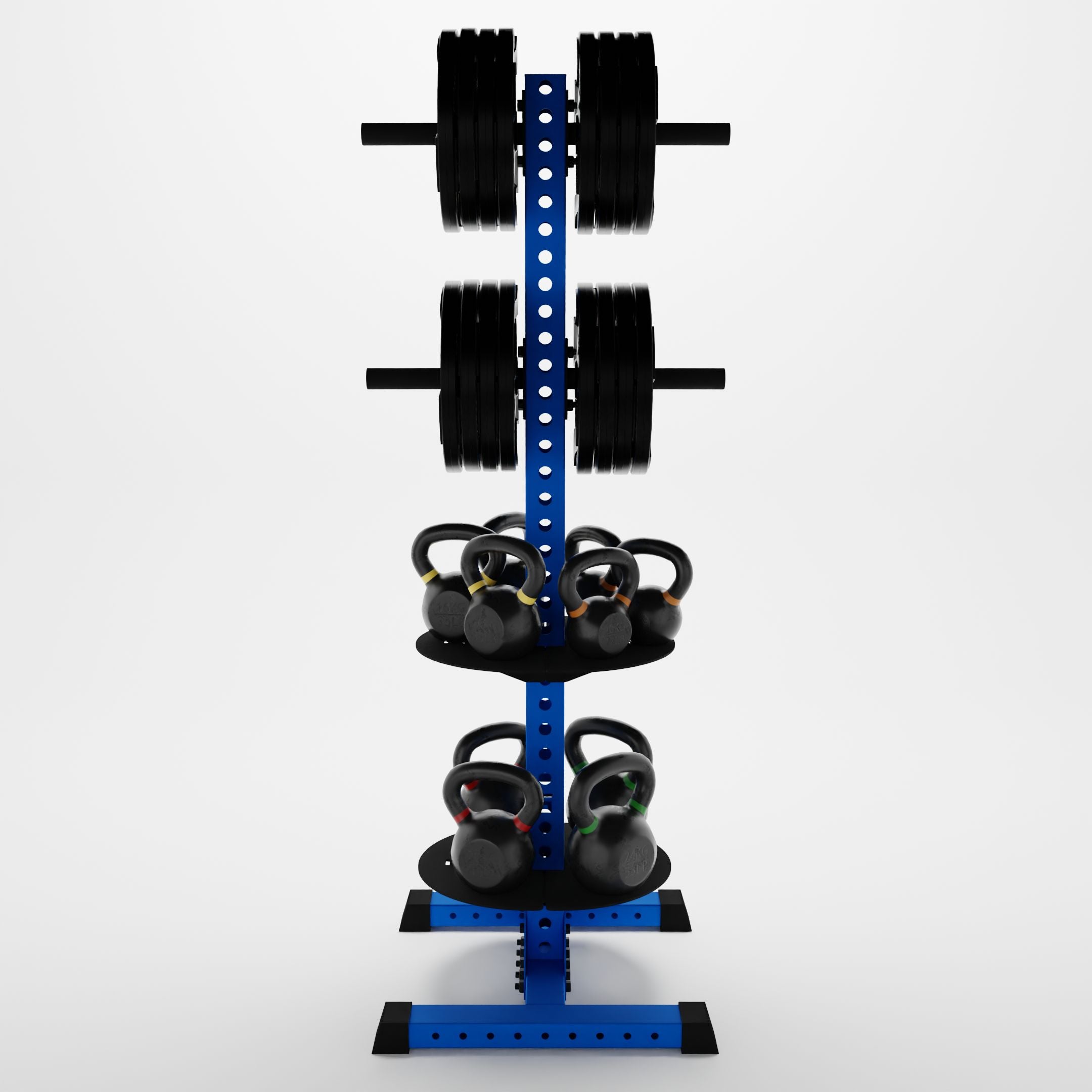
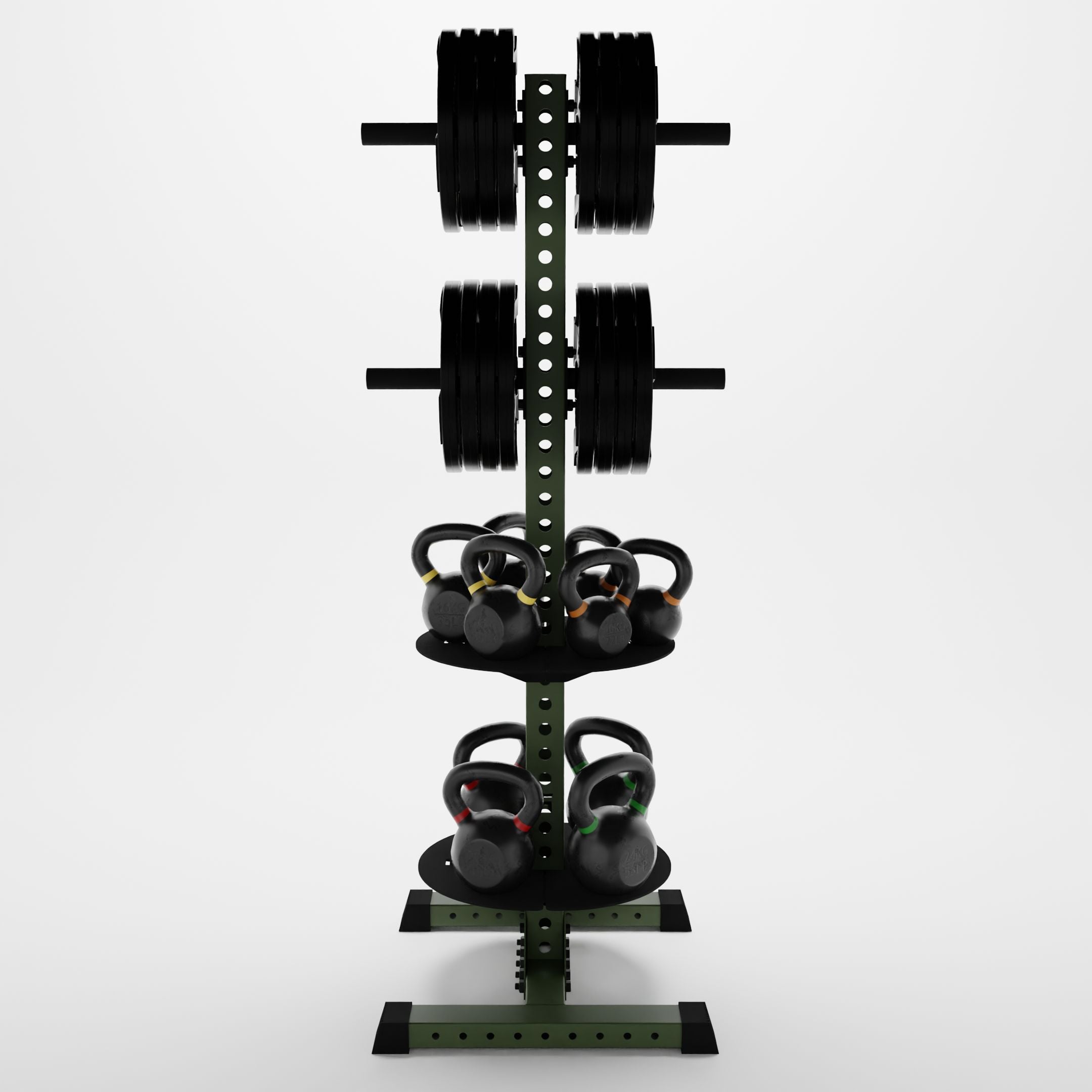
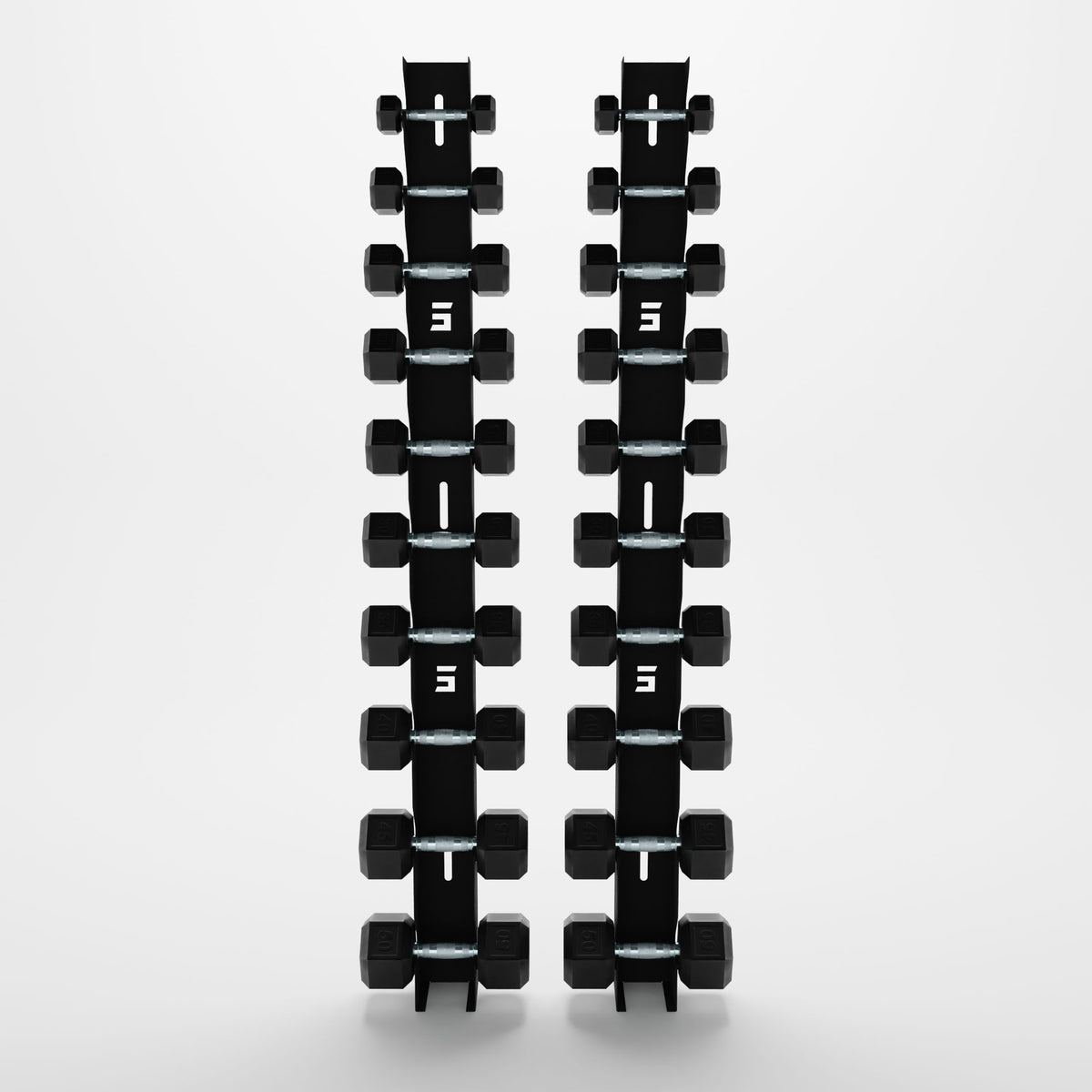
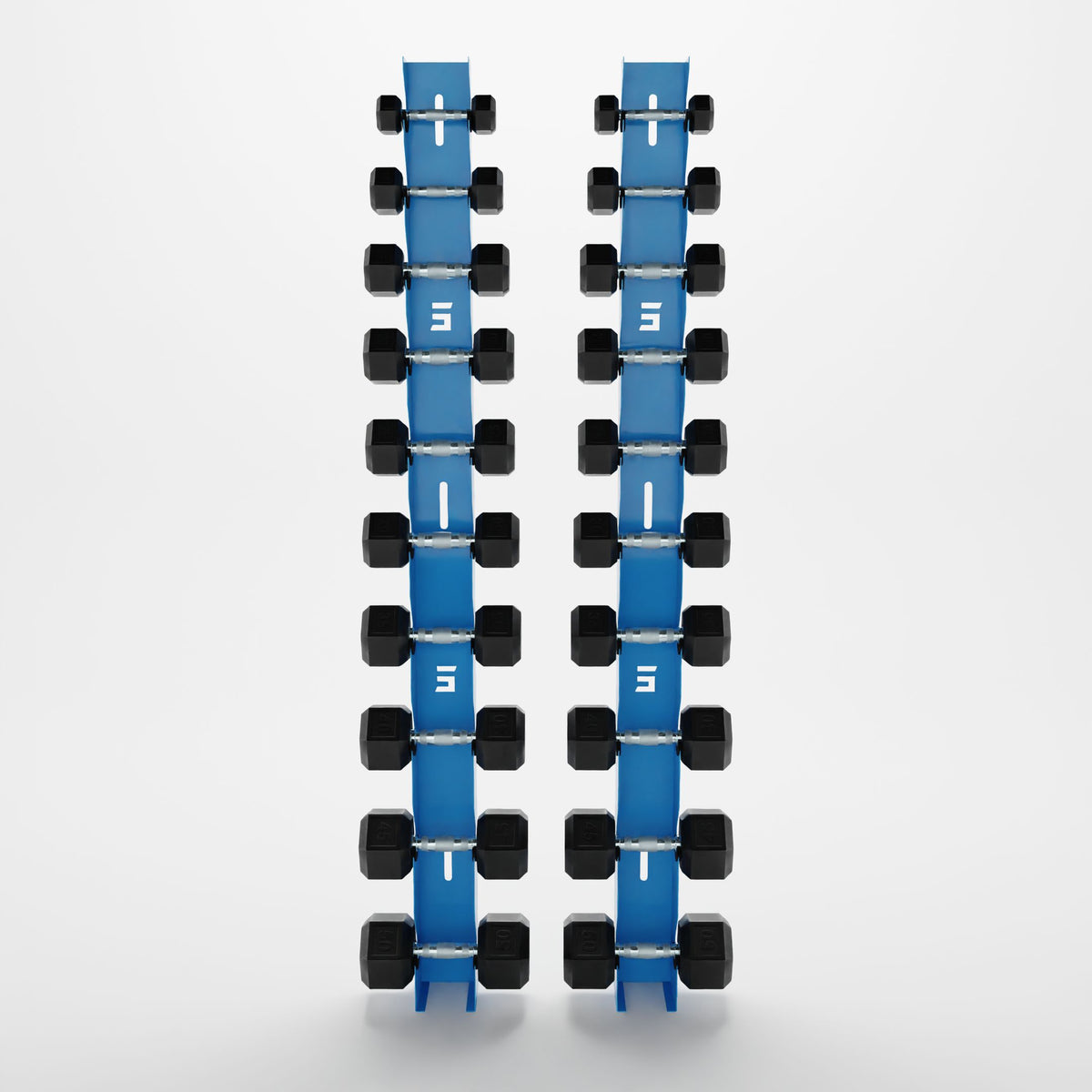
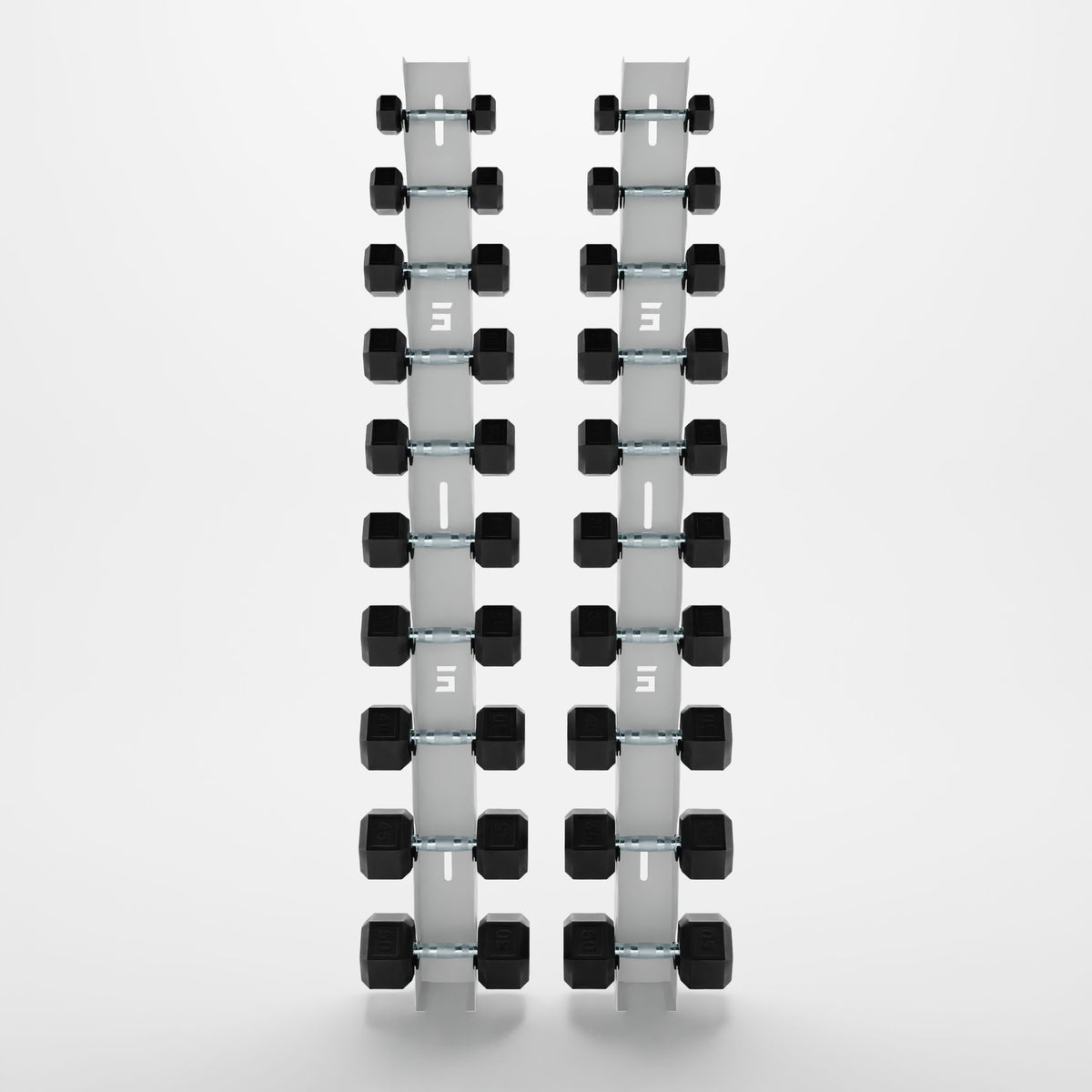
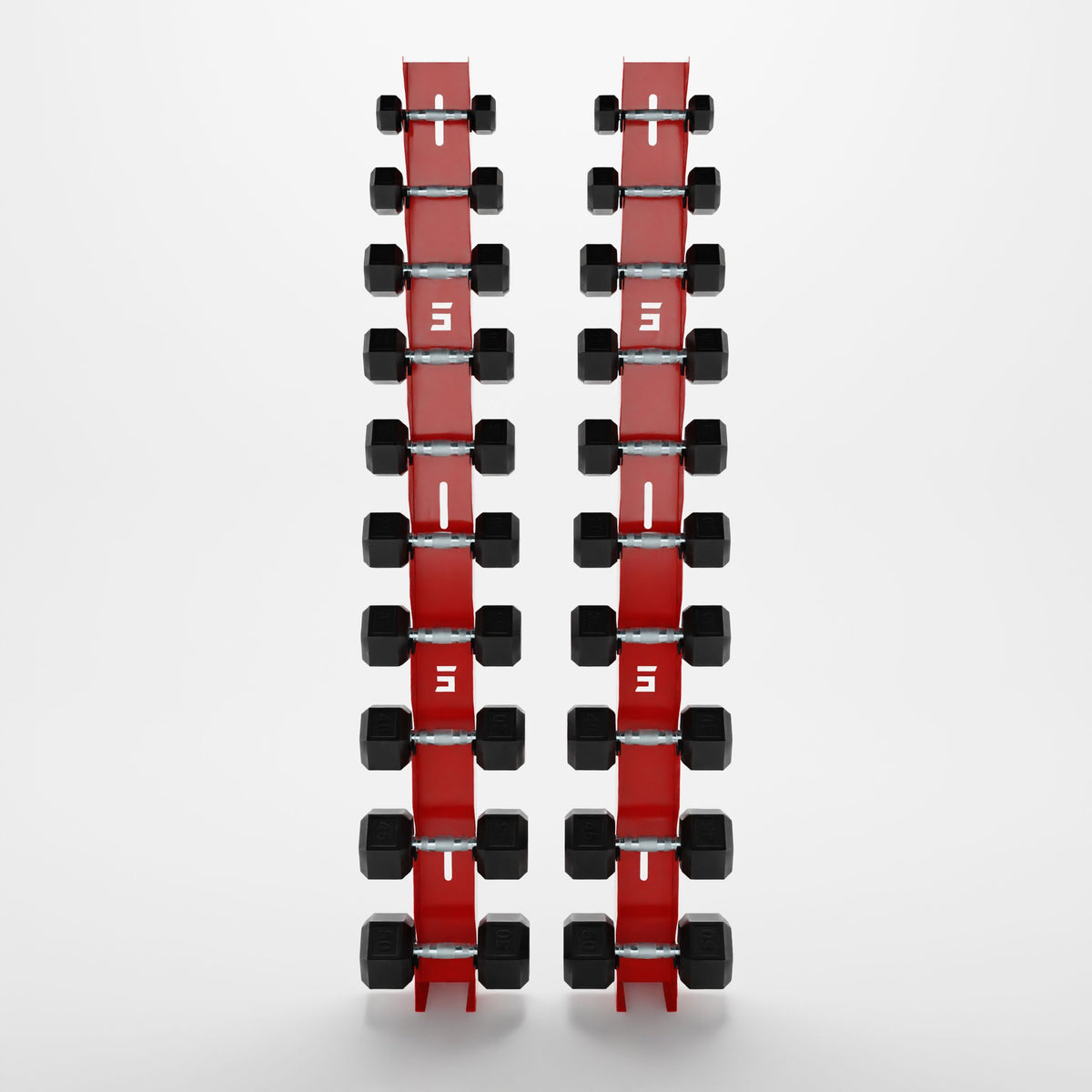
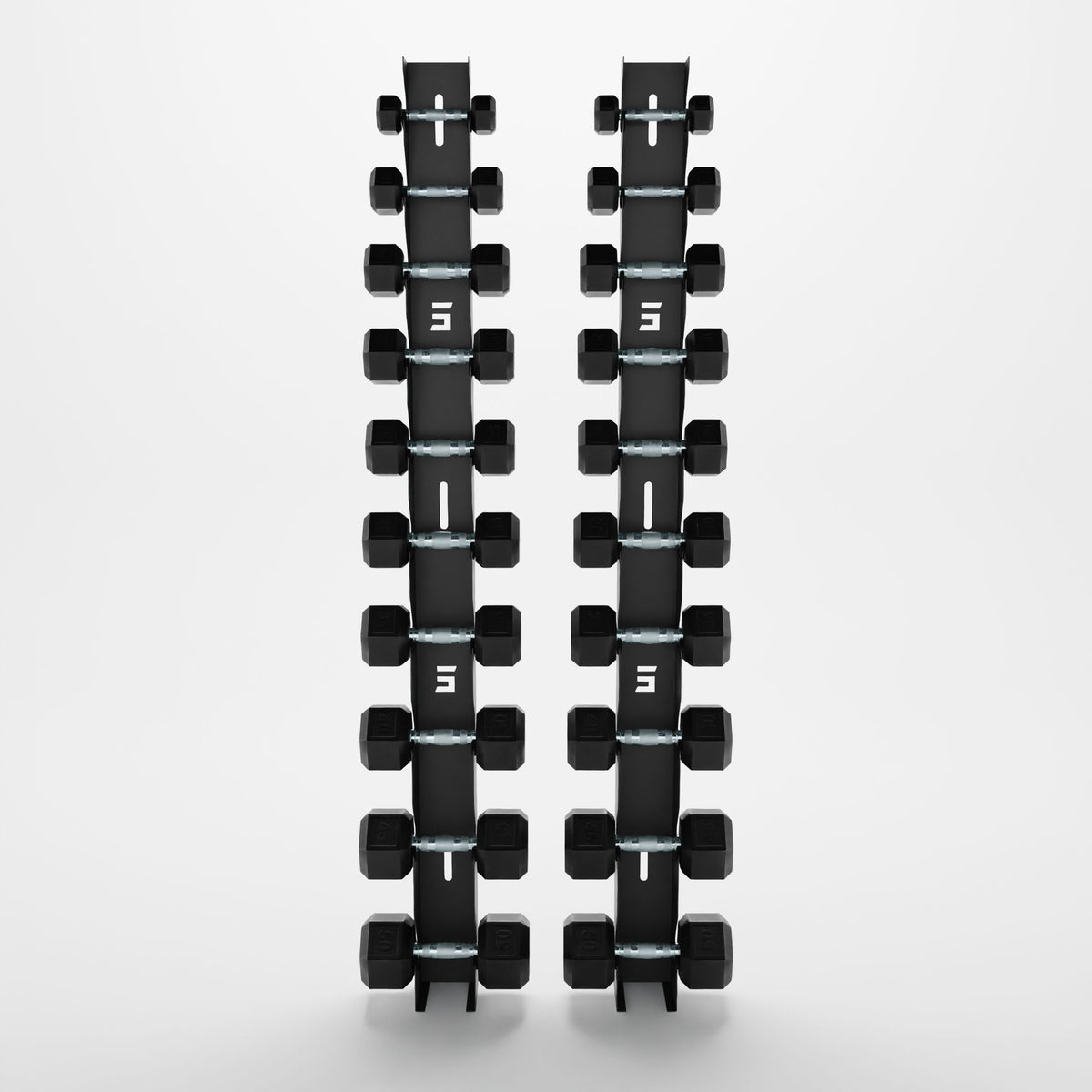
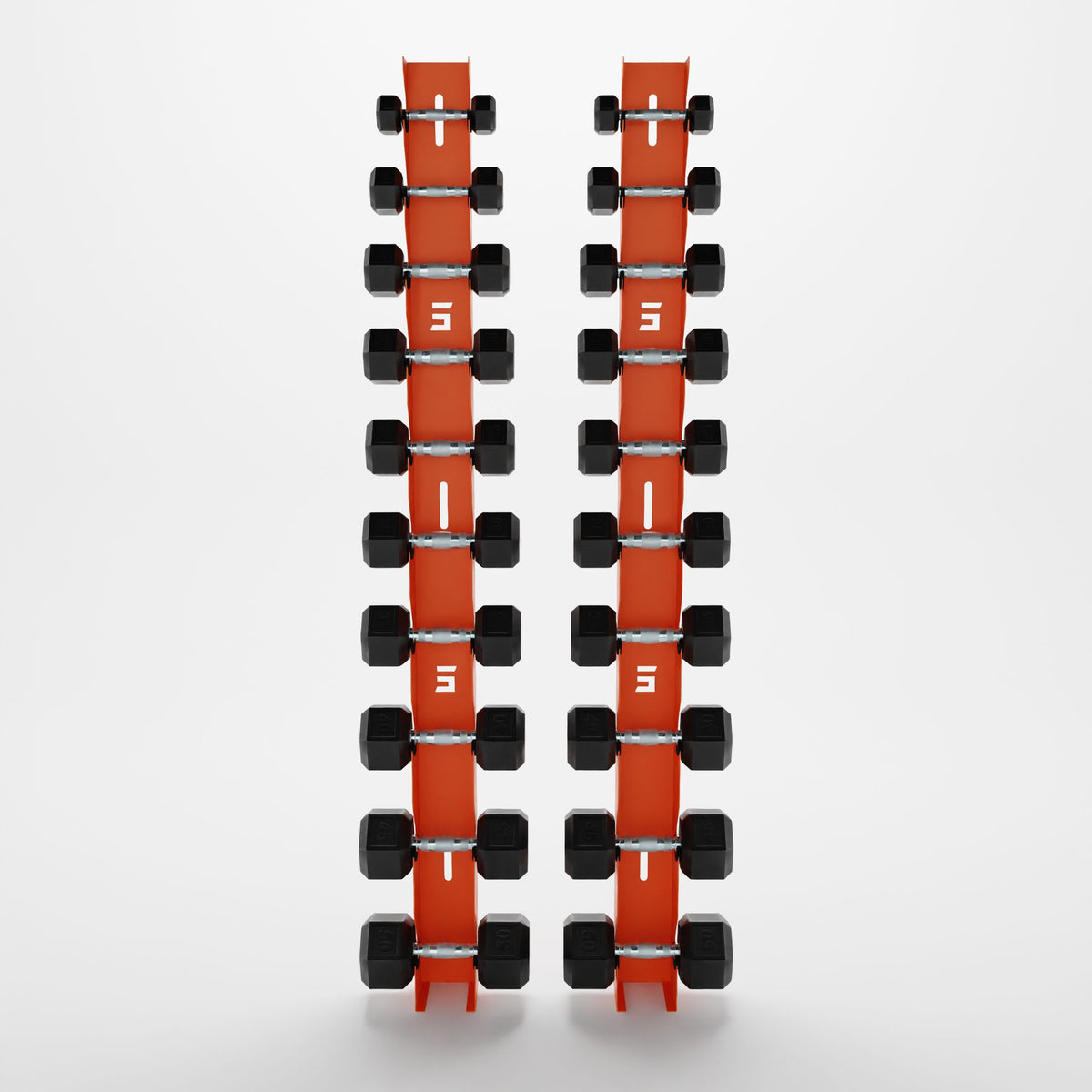
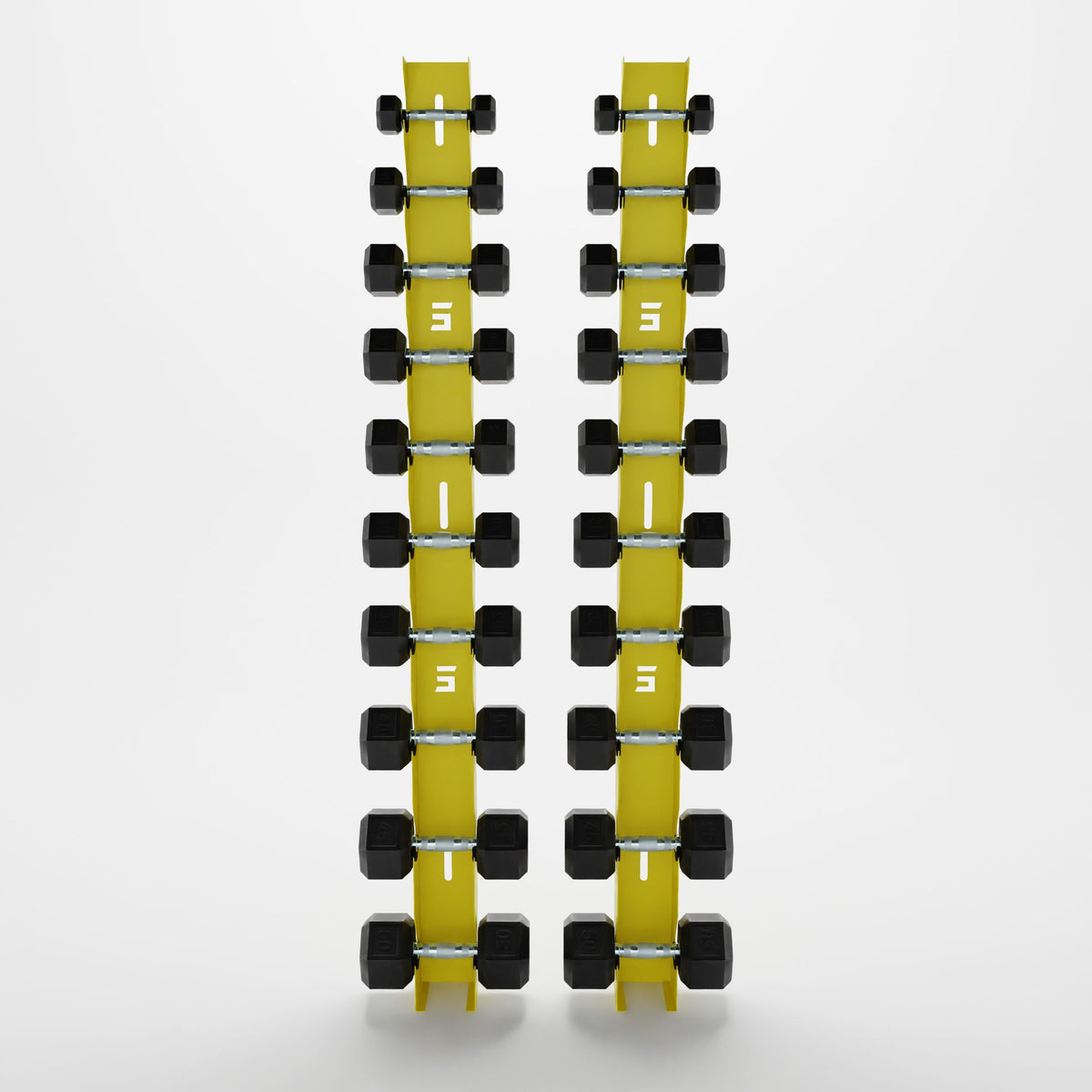
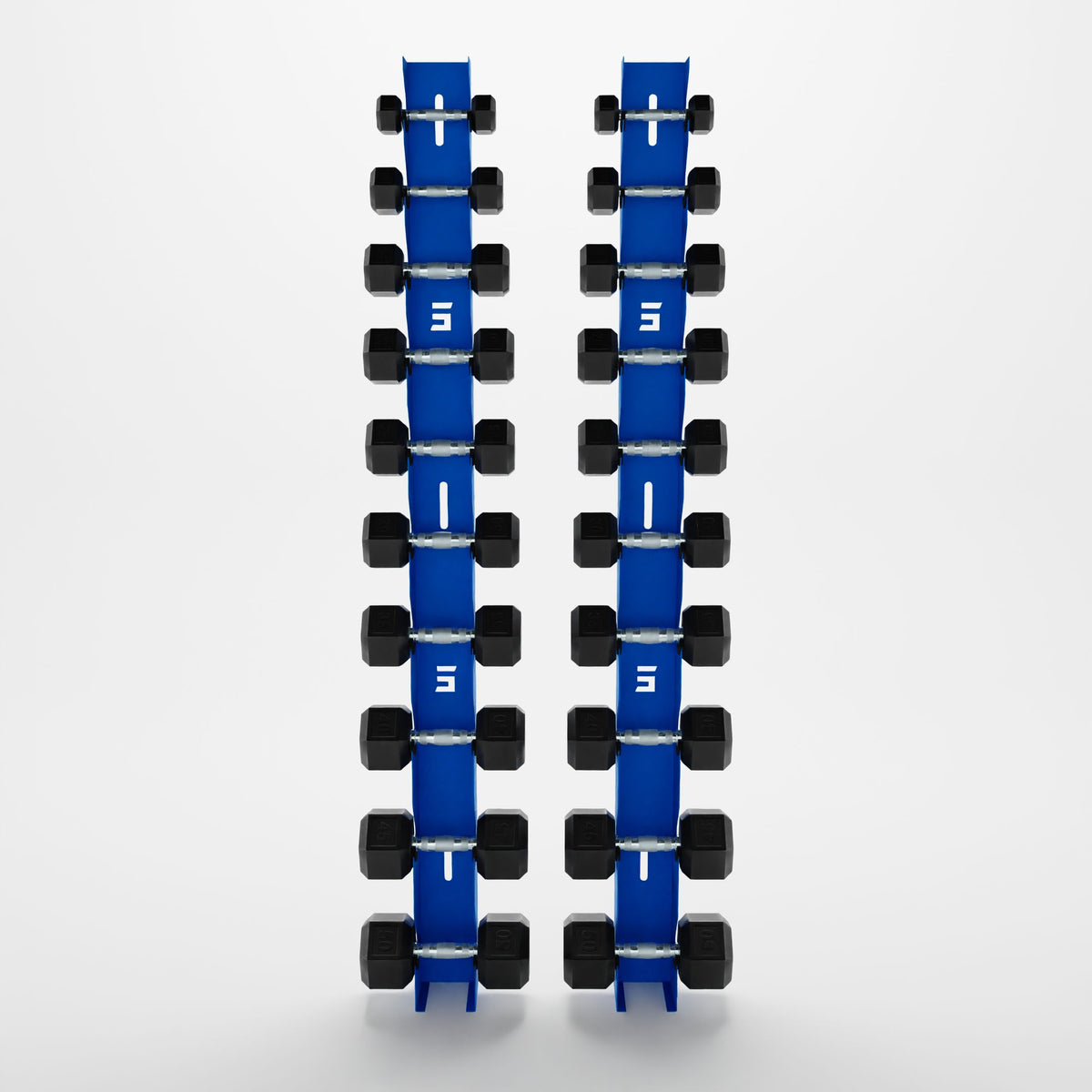
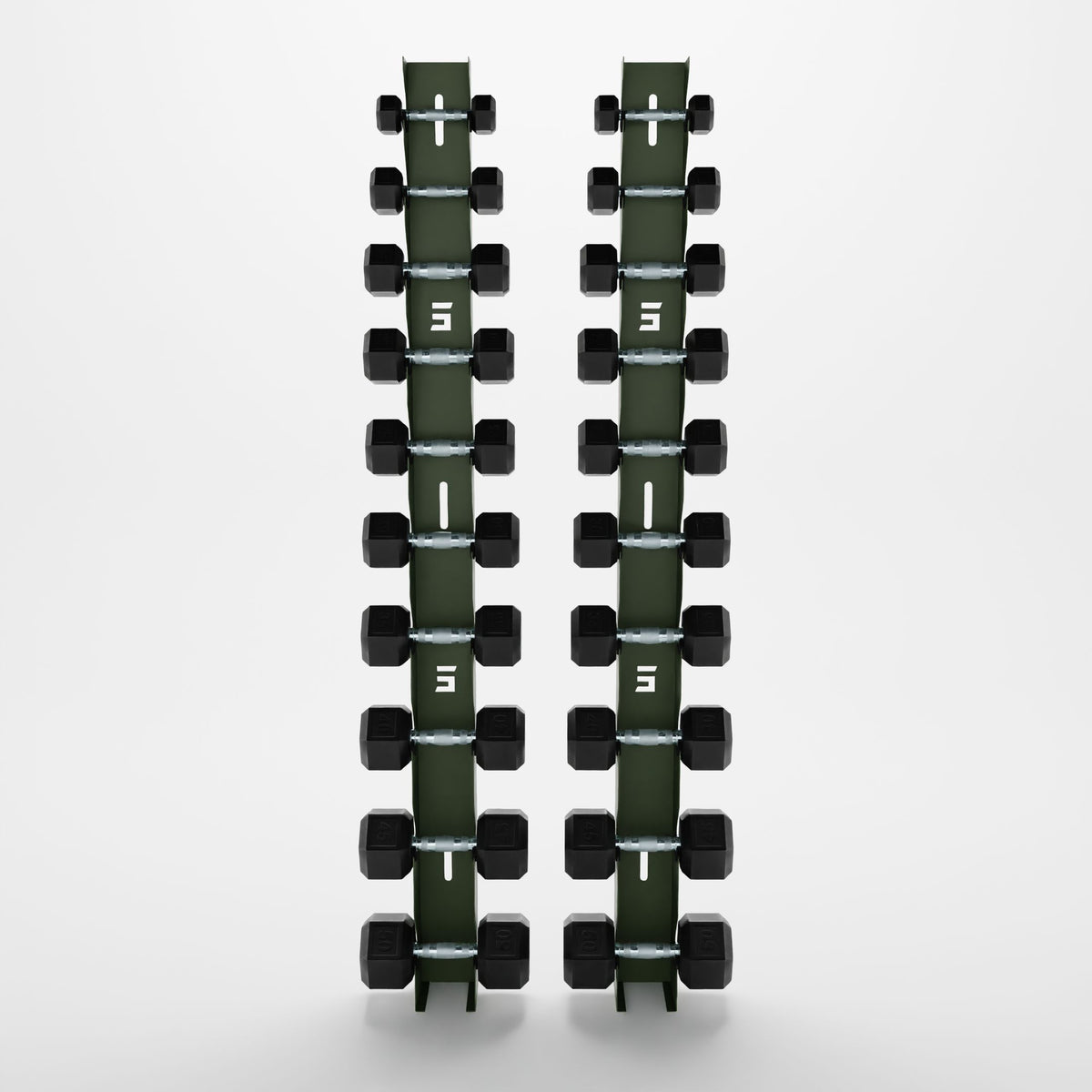
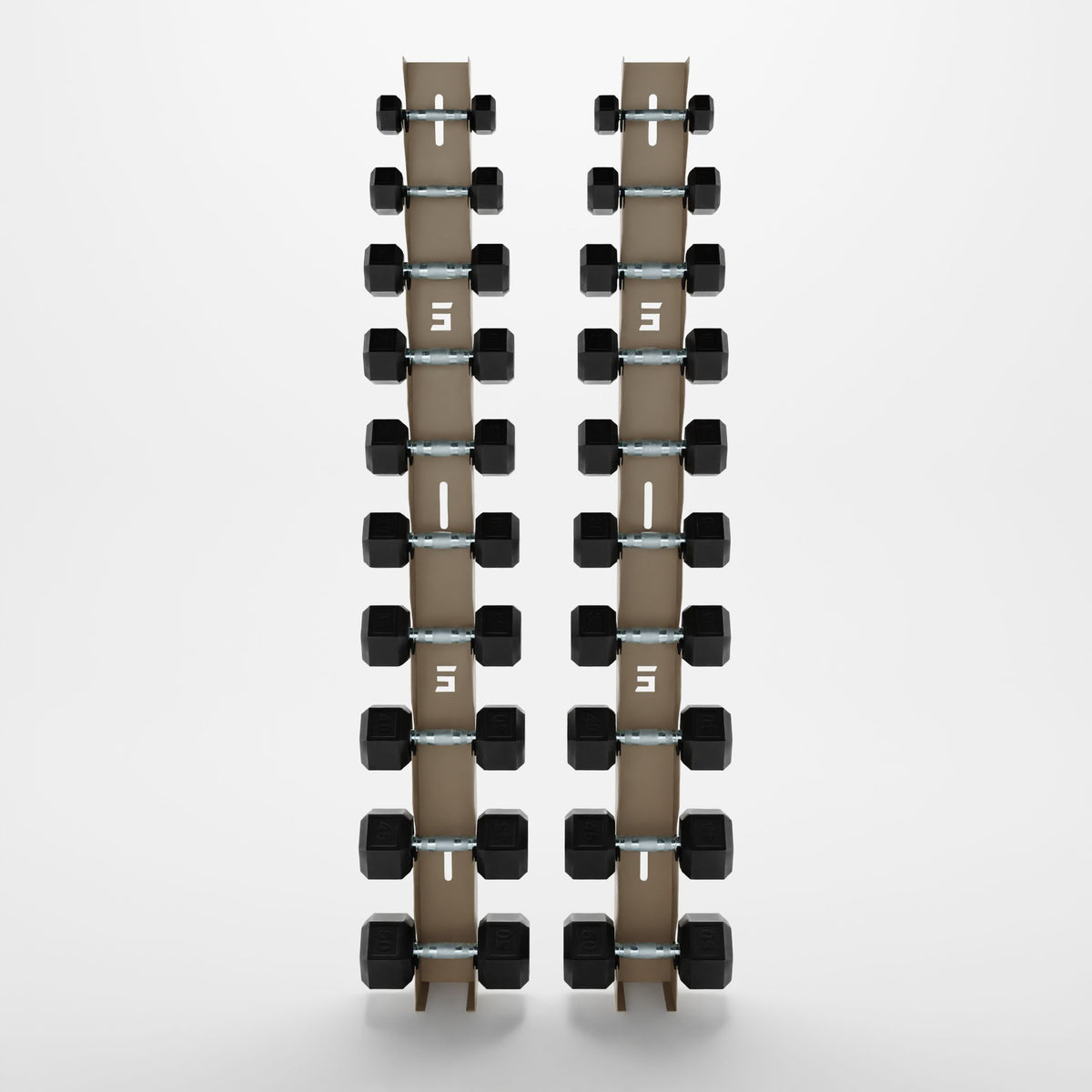
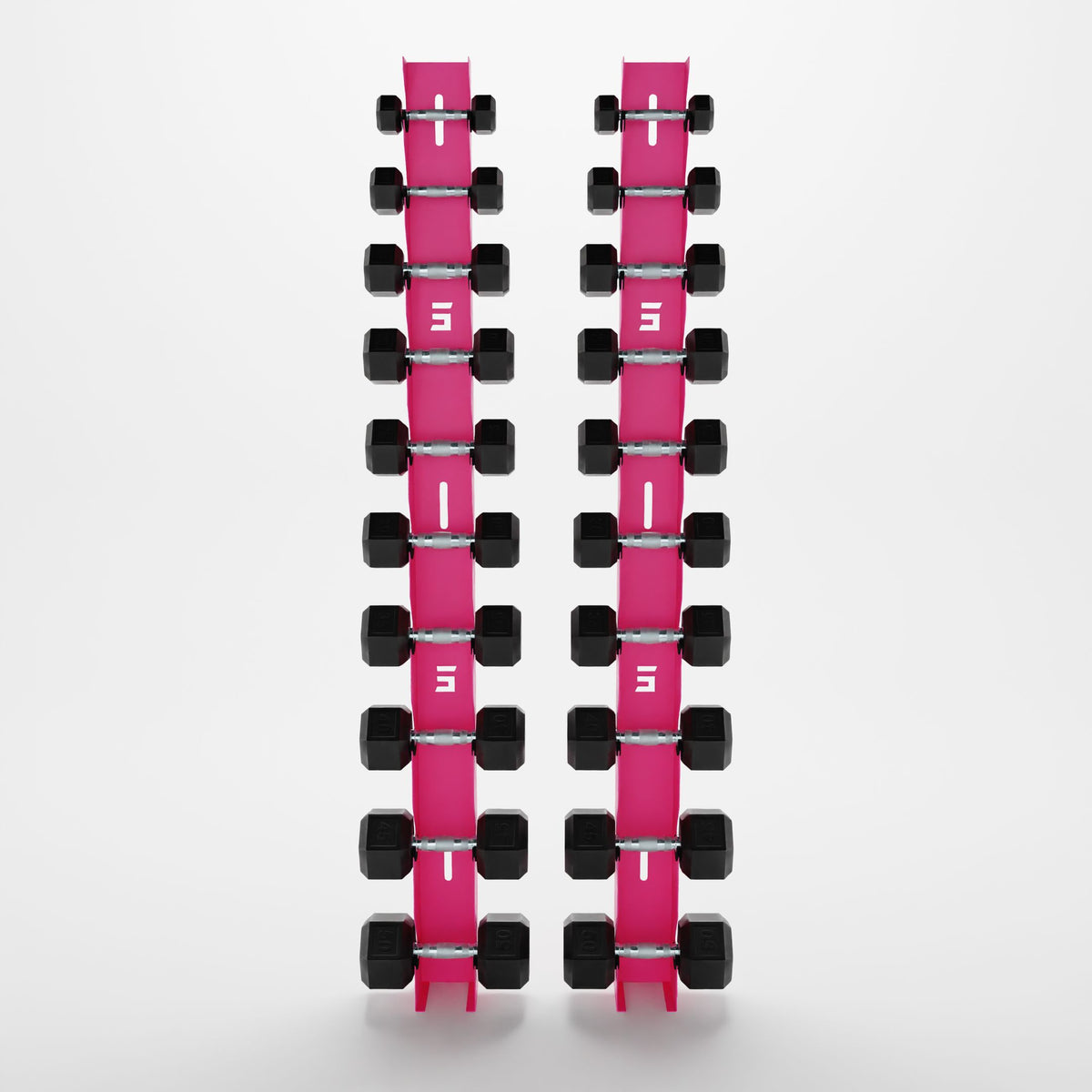
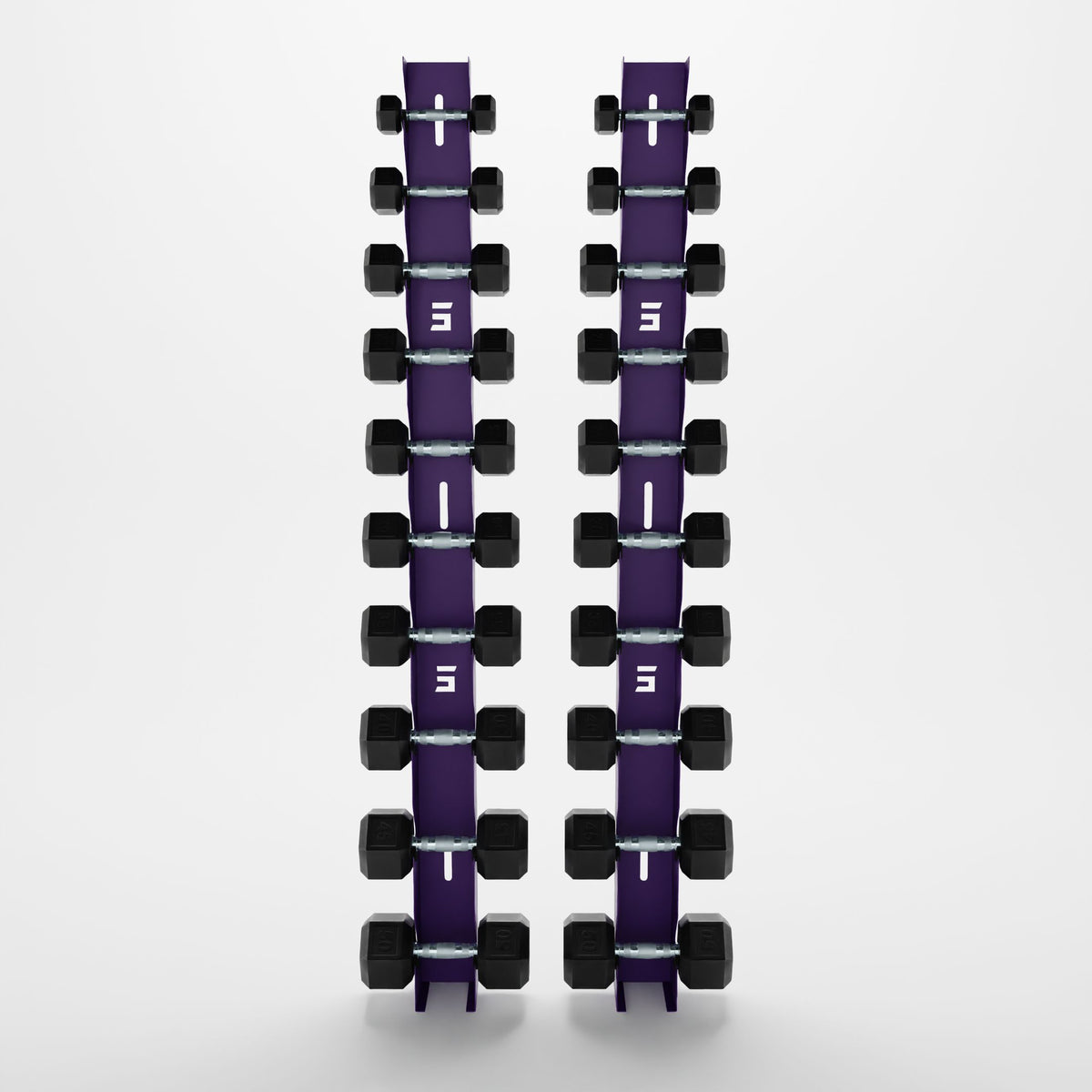
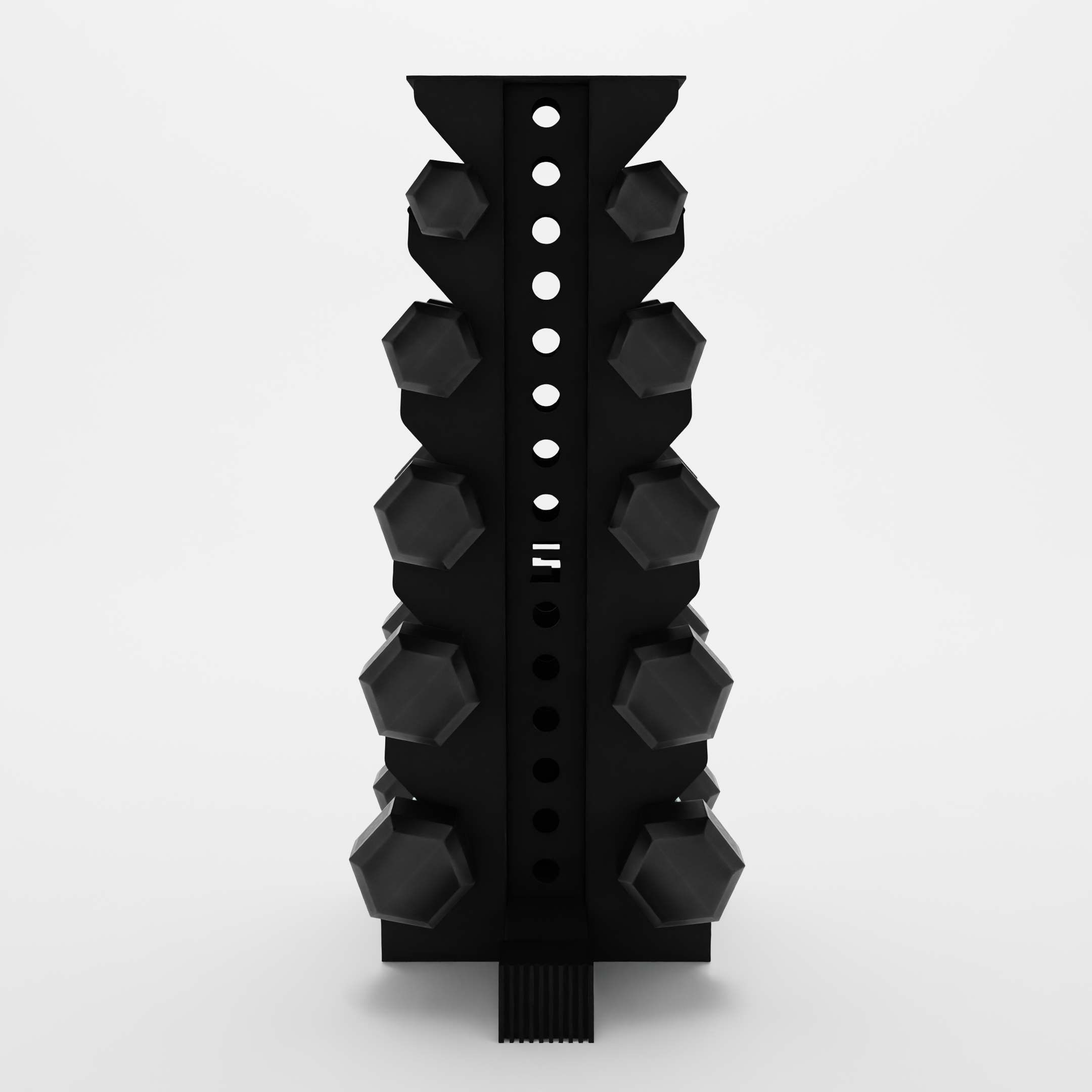
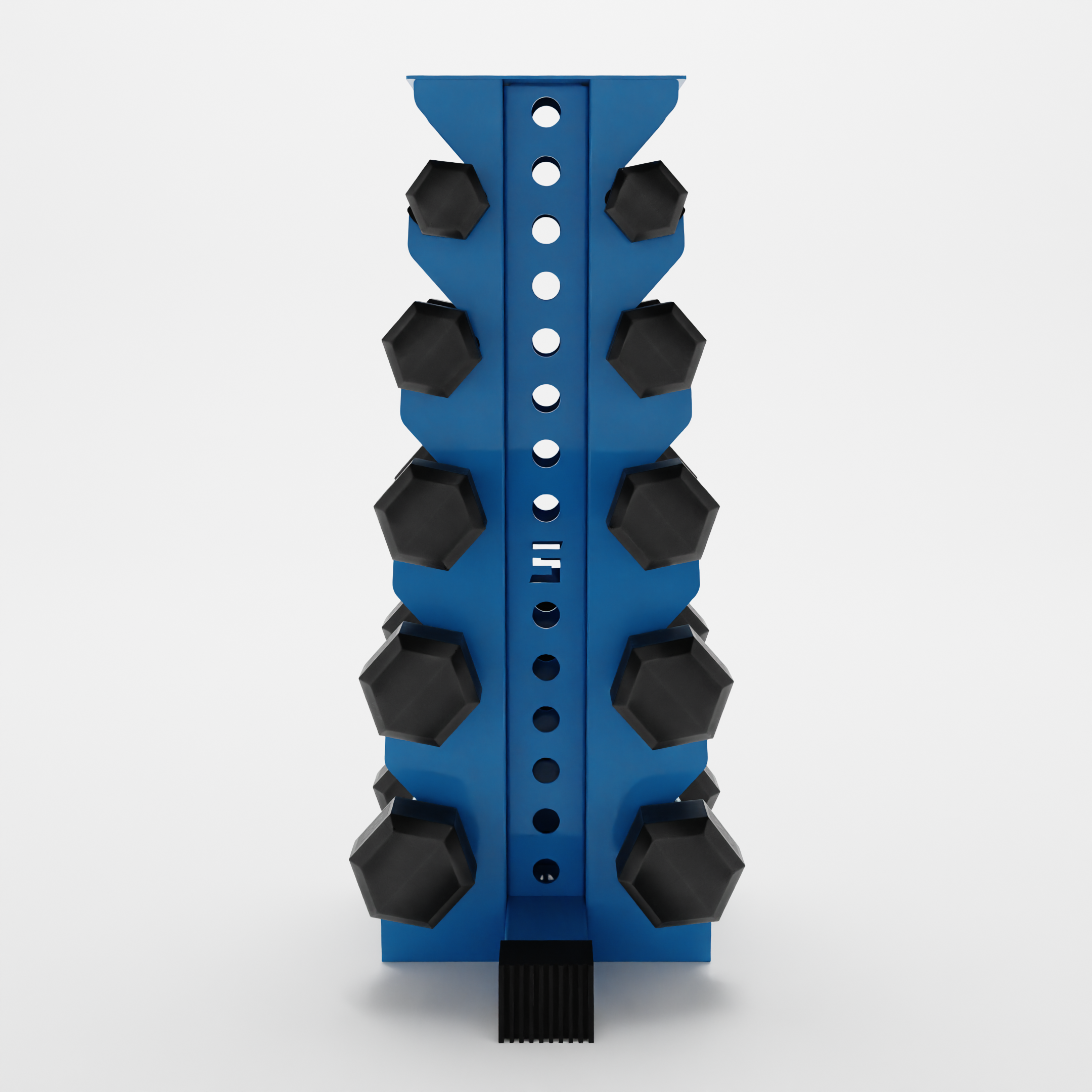
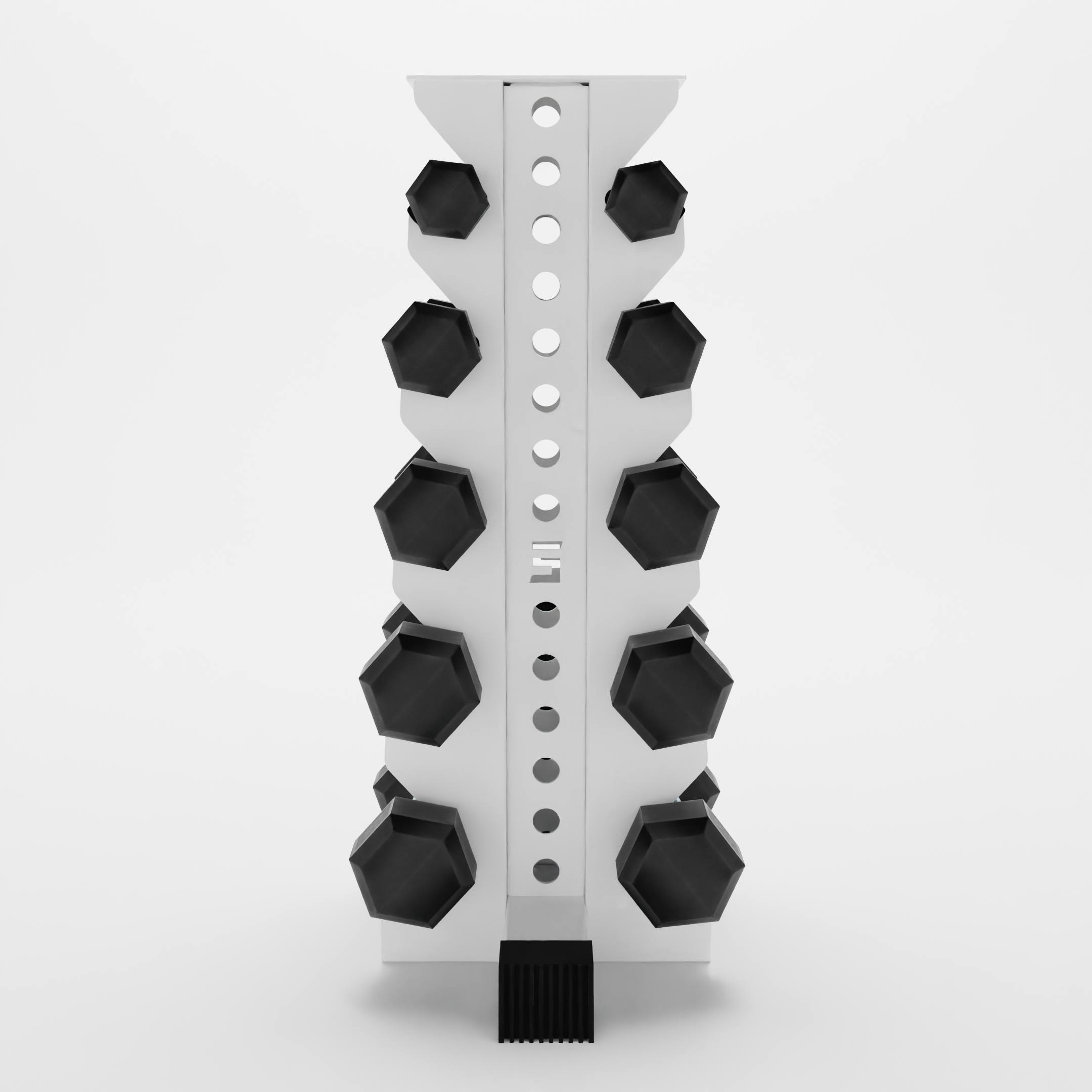
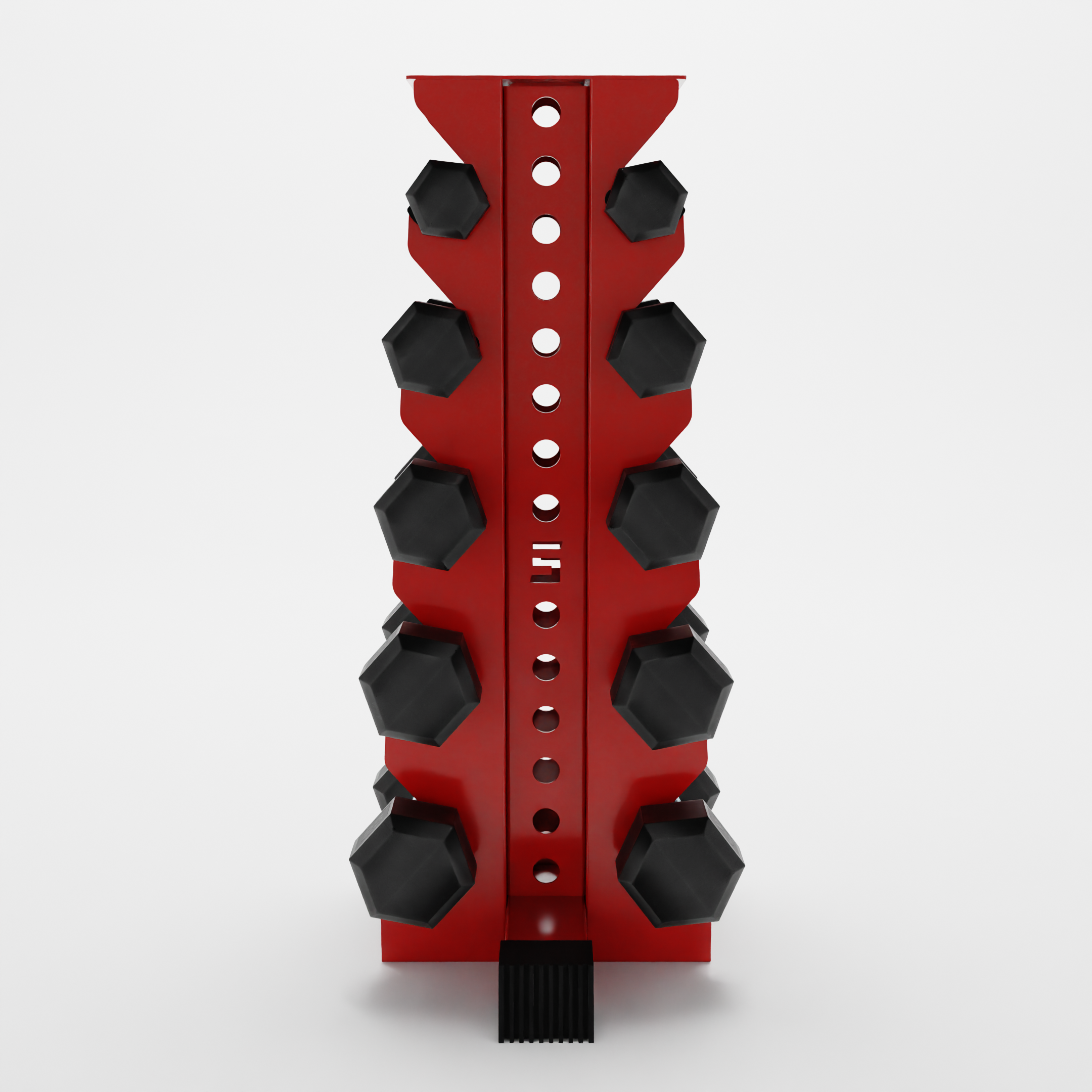
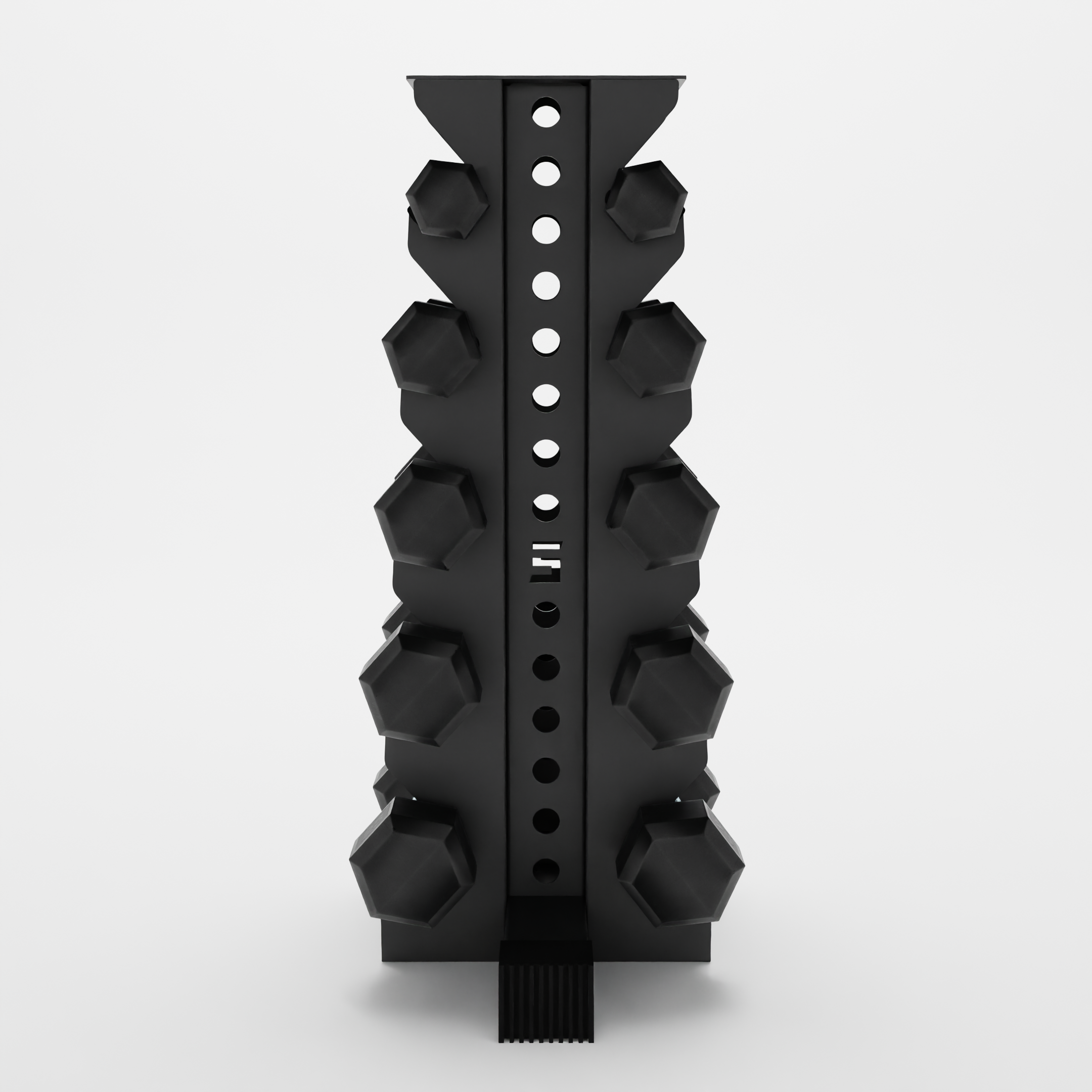
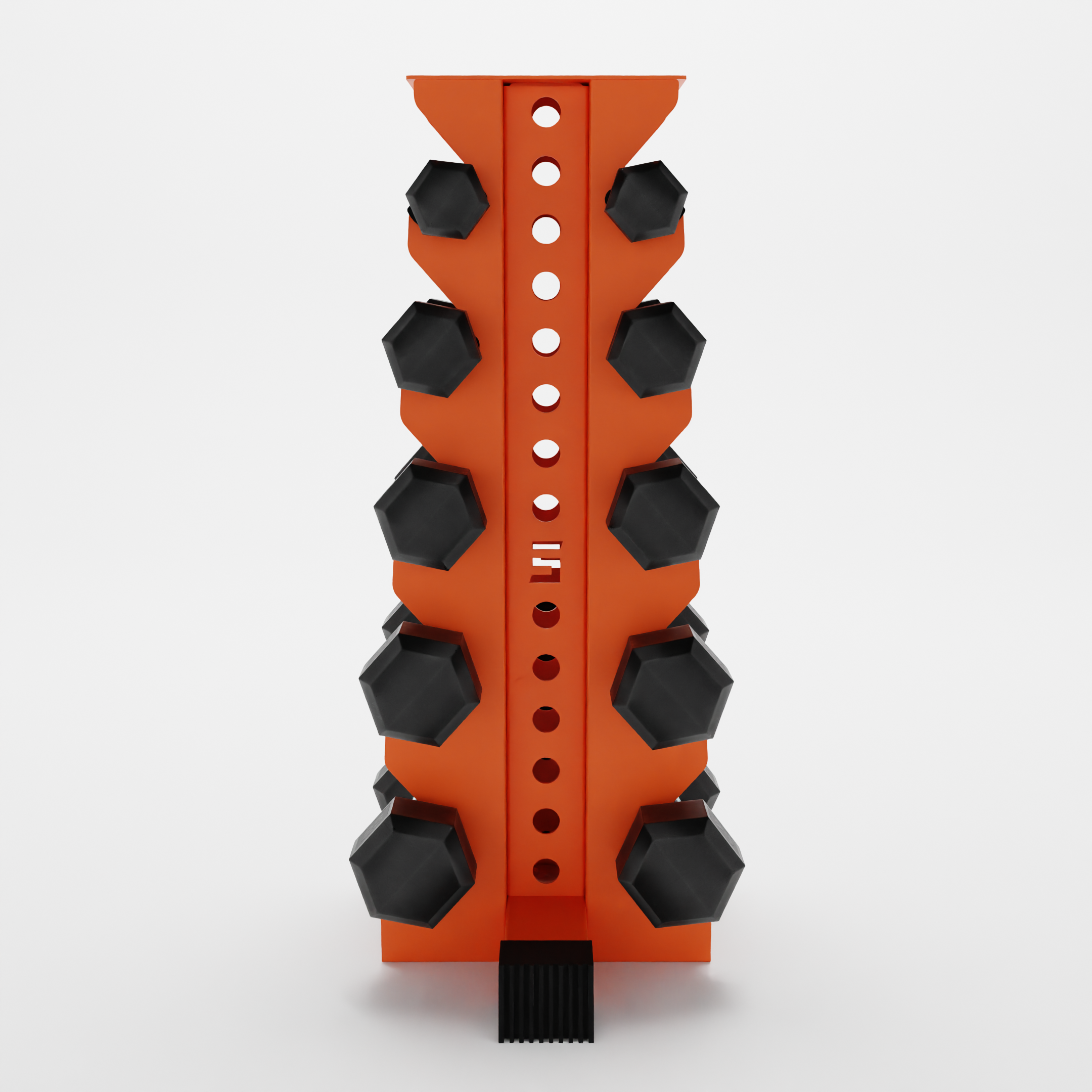
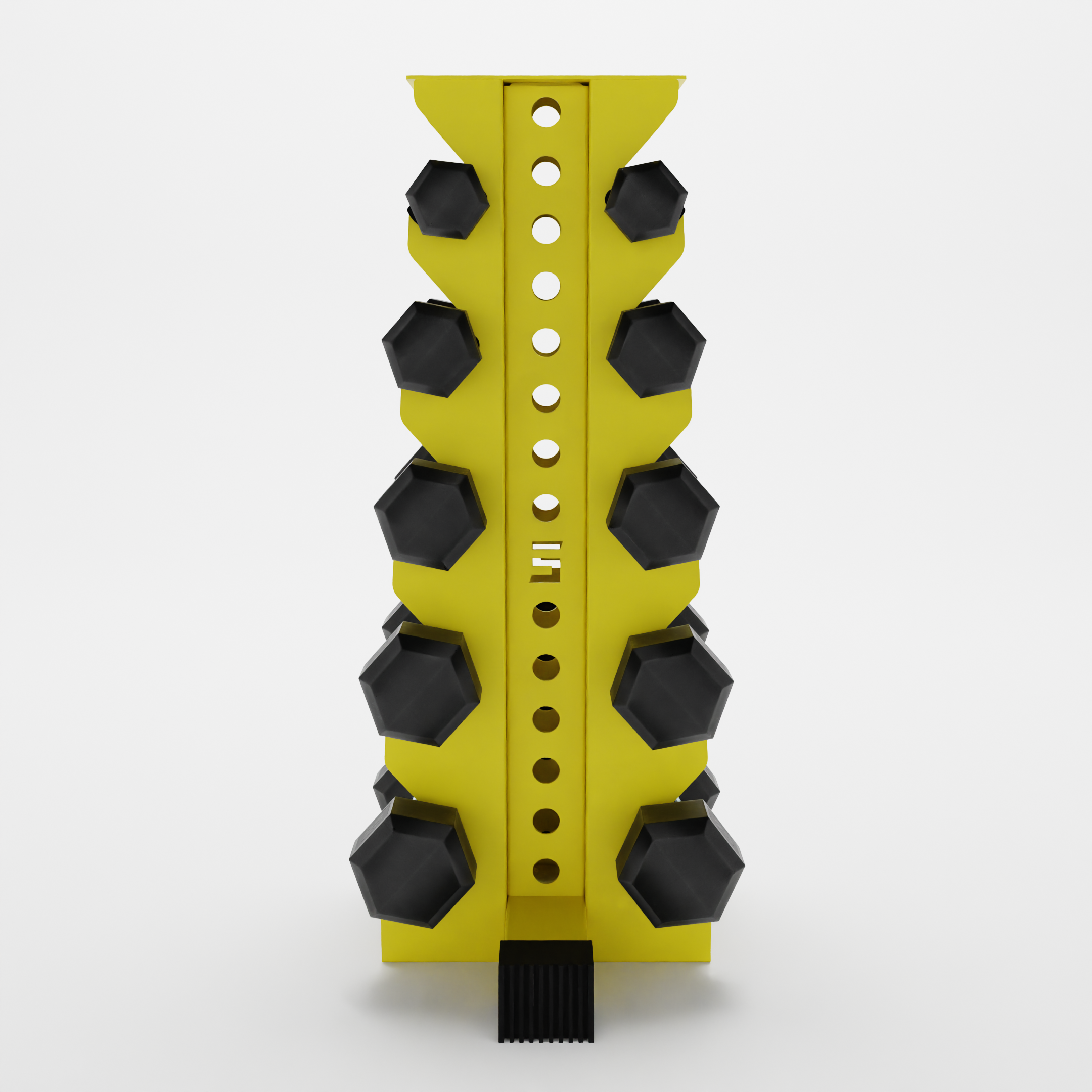
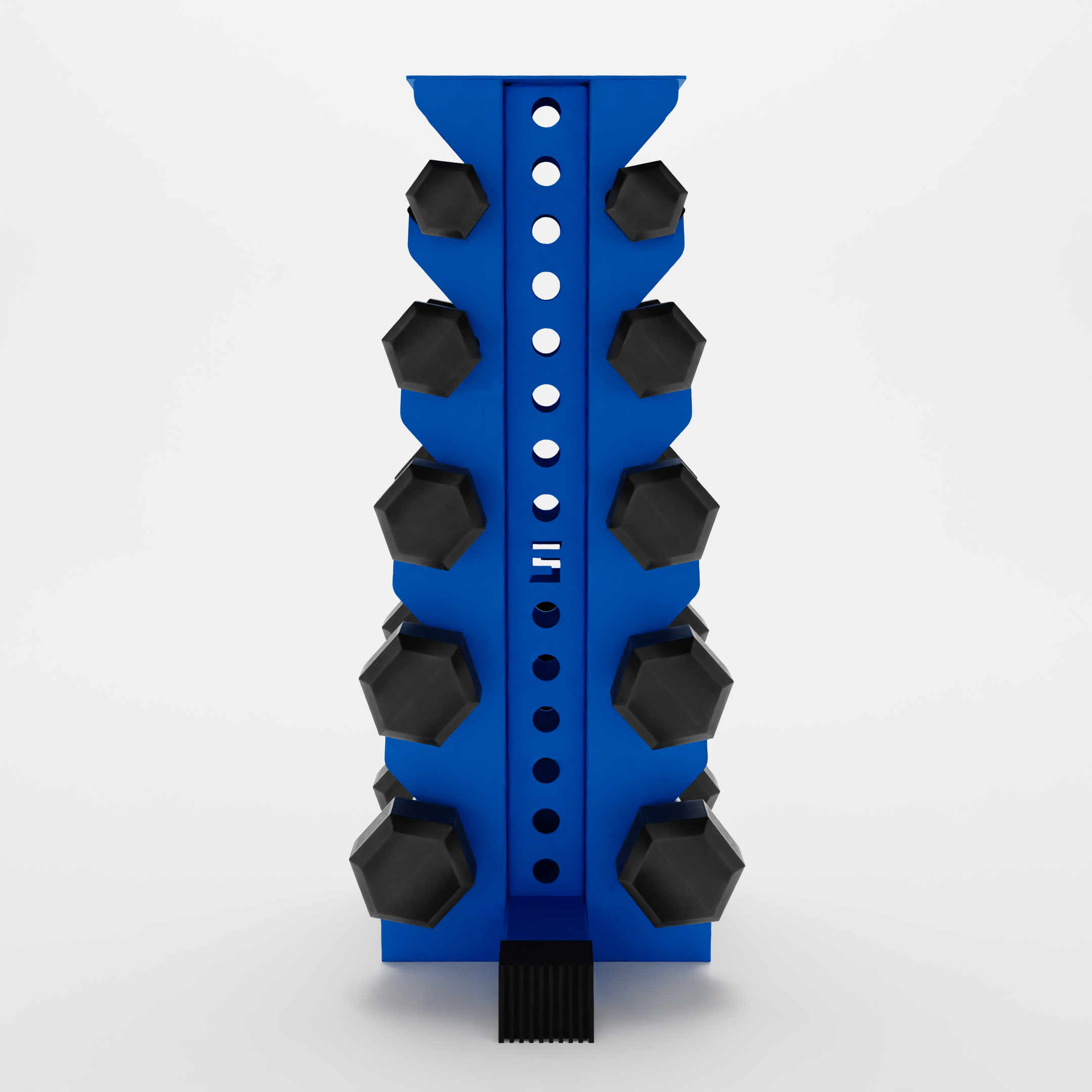
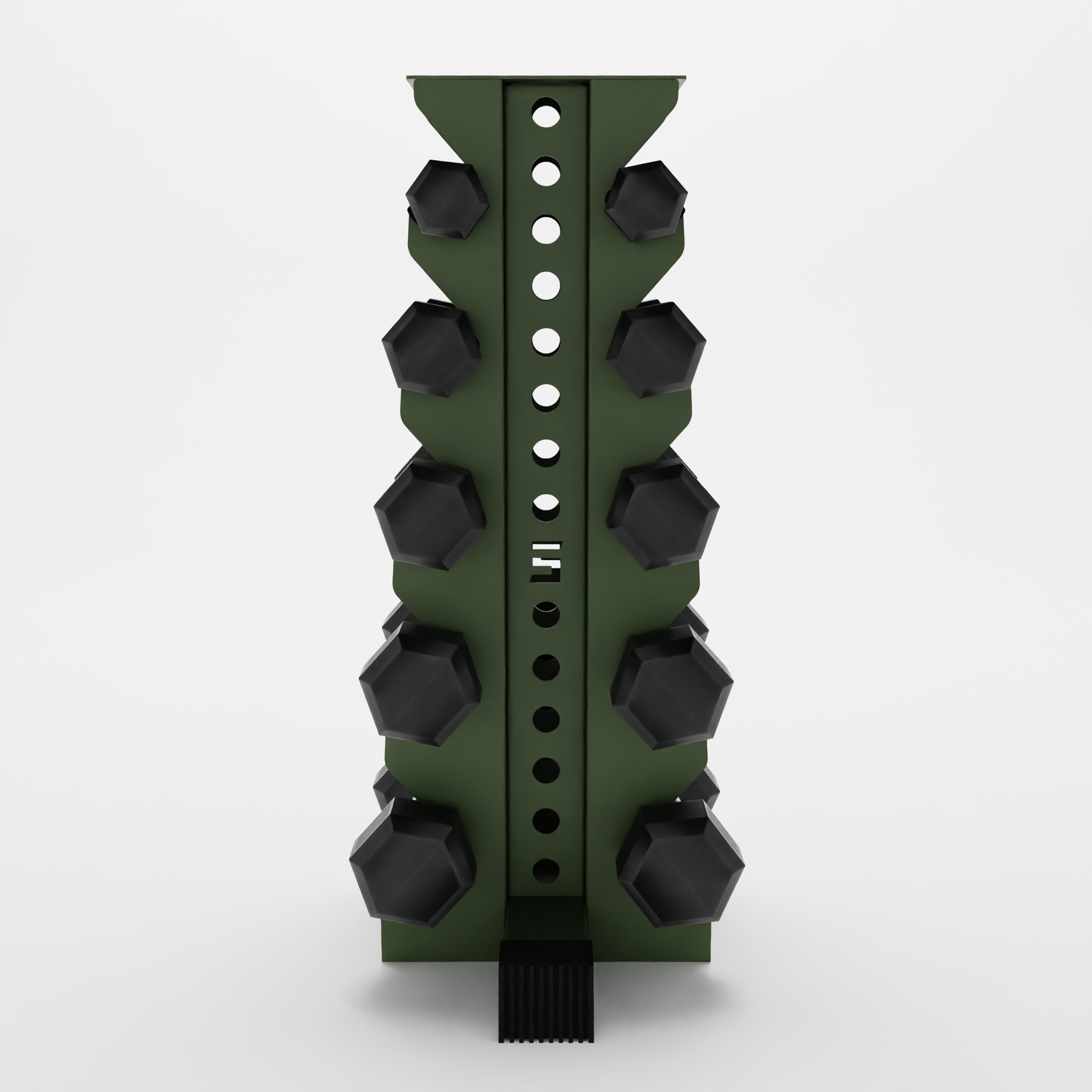
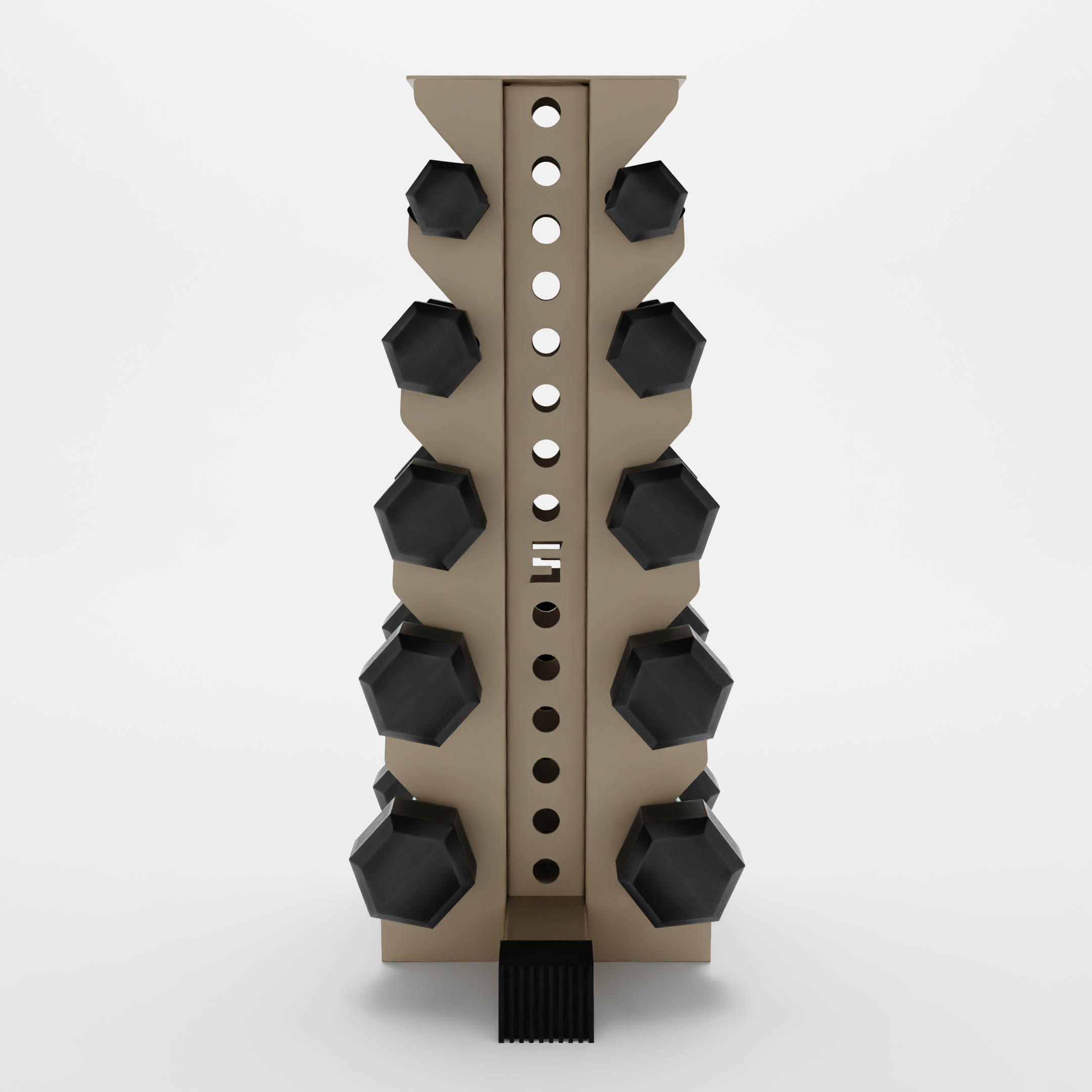
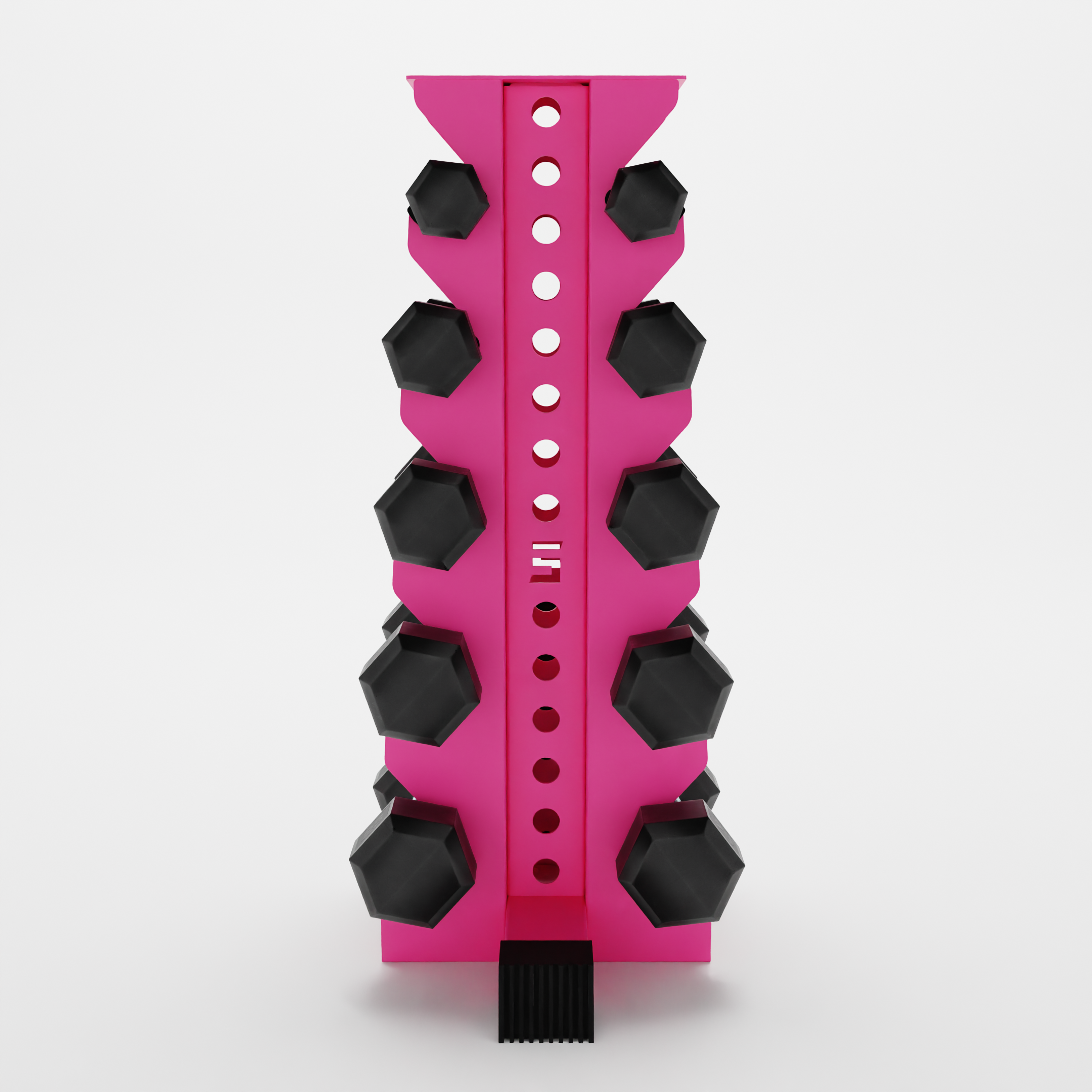
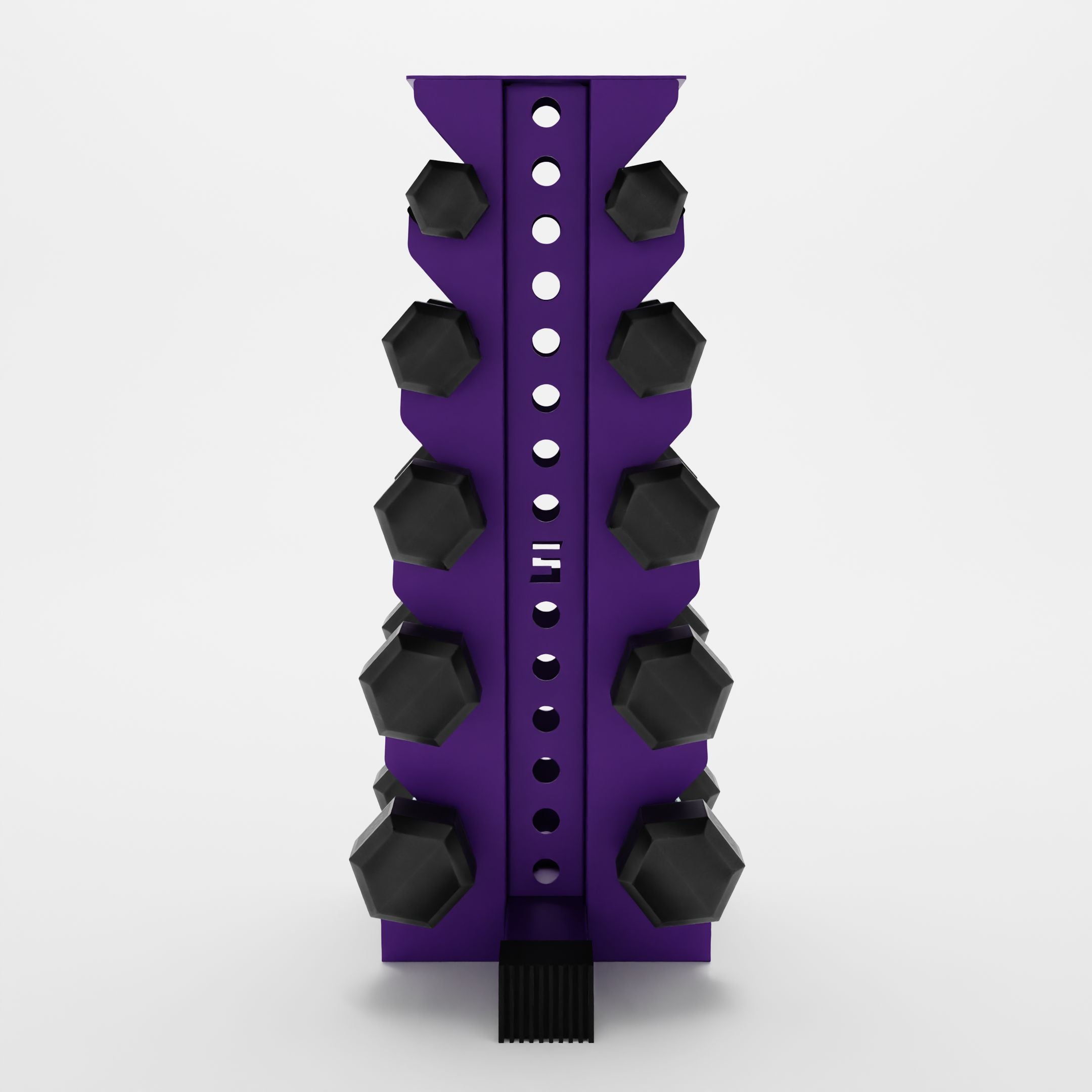
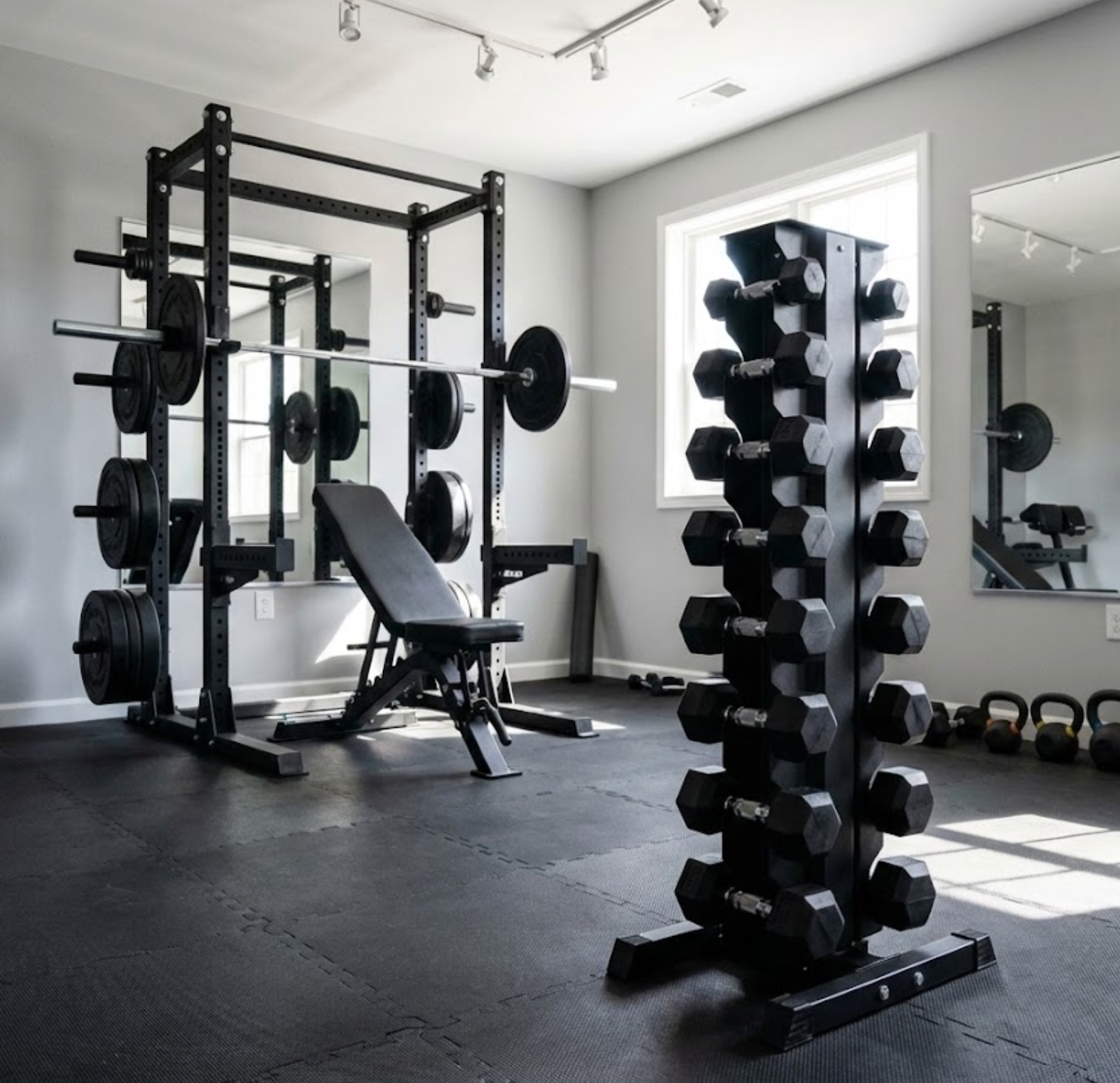
We specialize in vertical dumbbell racks, like our Delta, Alpha, or Bravo models. Unlike wide, horizontal racks that take up large areas of floor space, the vertical design minimizes the footprint, ensuring your workspace remains open and clear. When performing dynamic movements like walking lunges, lateral lunges, or box jumps, a clear floor is essential for both performance and safety.
2. Built for Quick Transitions
During a high-intensity circuit or a challenging drop set, time is muscle. Having your dumbbells organized vertically from lightest to heaviest allows you to quickly grab the next set of weights without having to search or walk across the room. This organization maintains your heart rate and maximizes the effectiveness of your home leg workout.

3. Durable for Heavy Weights
Leg workouts often require the heaviest dumbbells you own. Our racks are made with high-quality materials designed to handle the load and abuse of daily use. The stability of a premium rack is important when you are fatigued and quickly returning a heavy dumbbell after an intense workout. Our racks ensure your equipment stays securely racked and won't tip or wobble, which is essential when dealing with heavy loads.
4. Multi-Functional
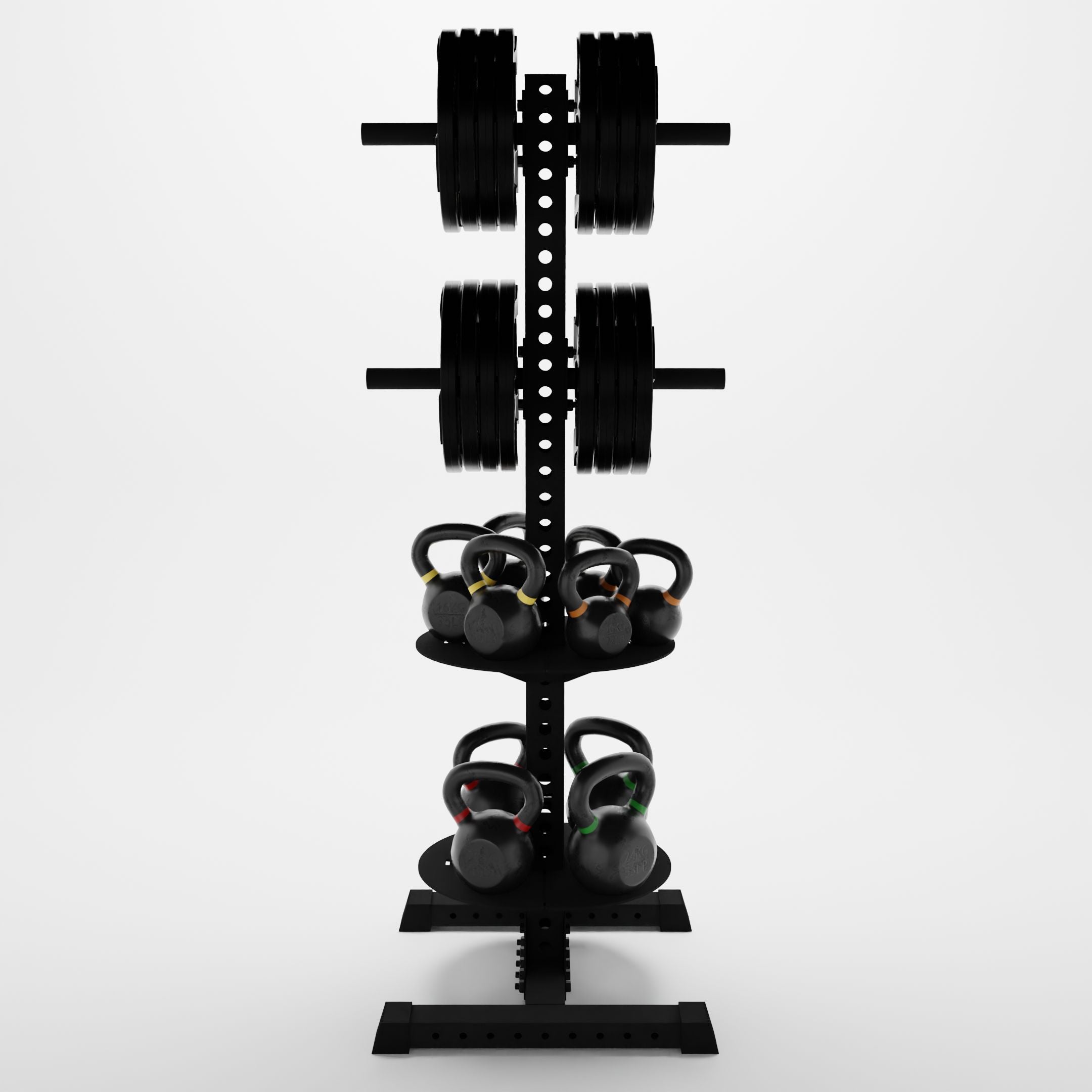
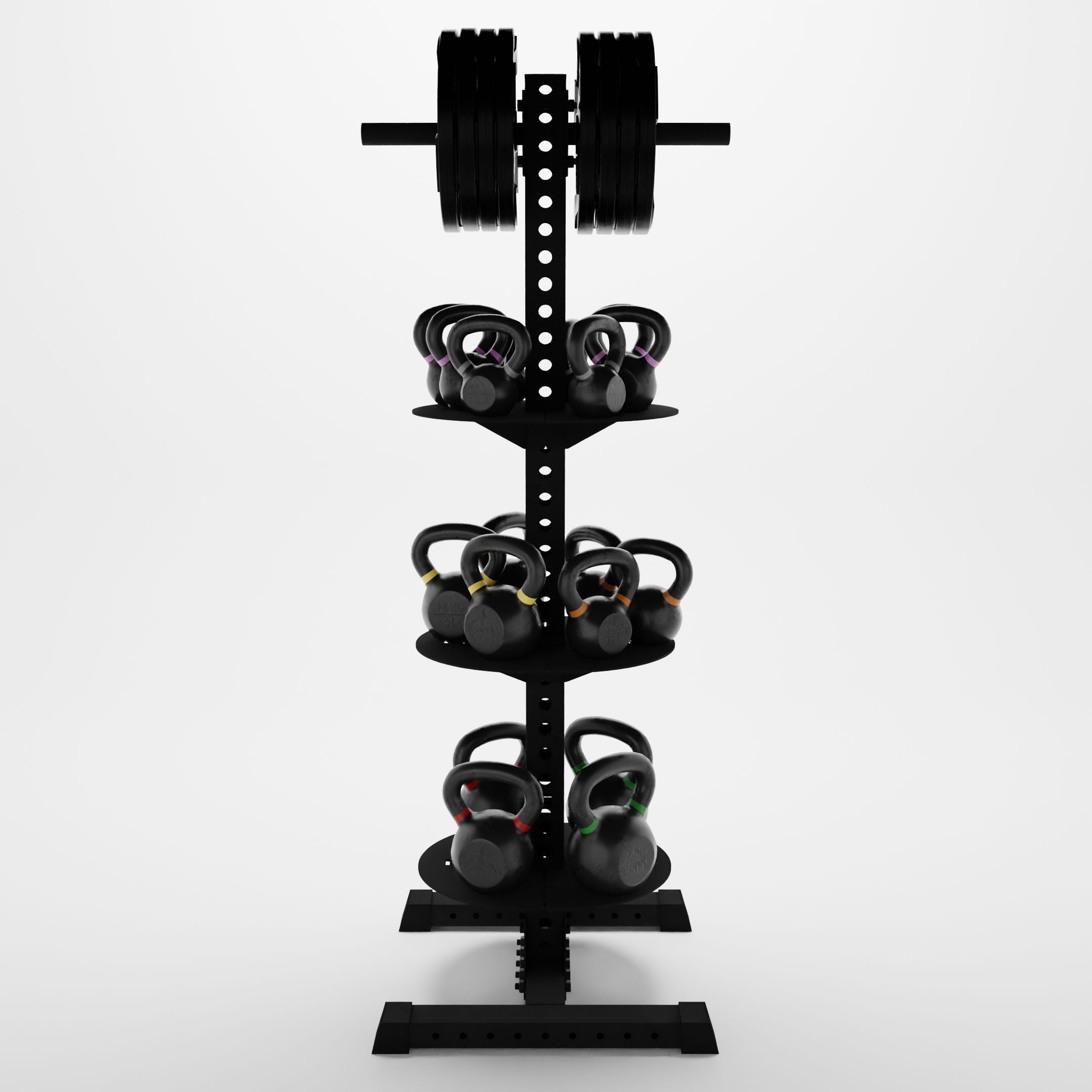
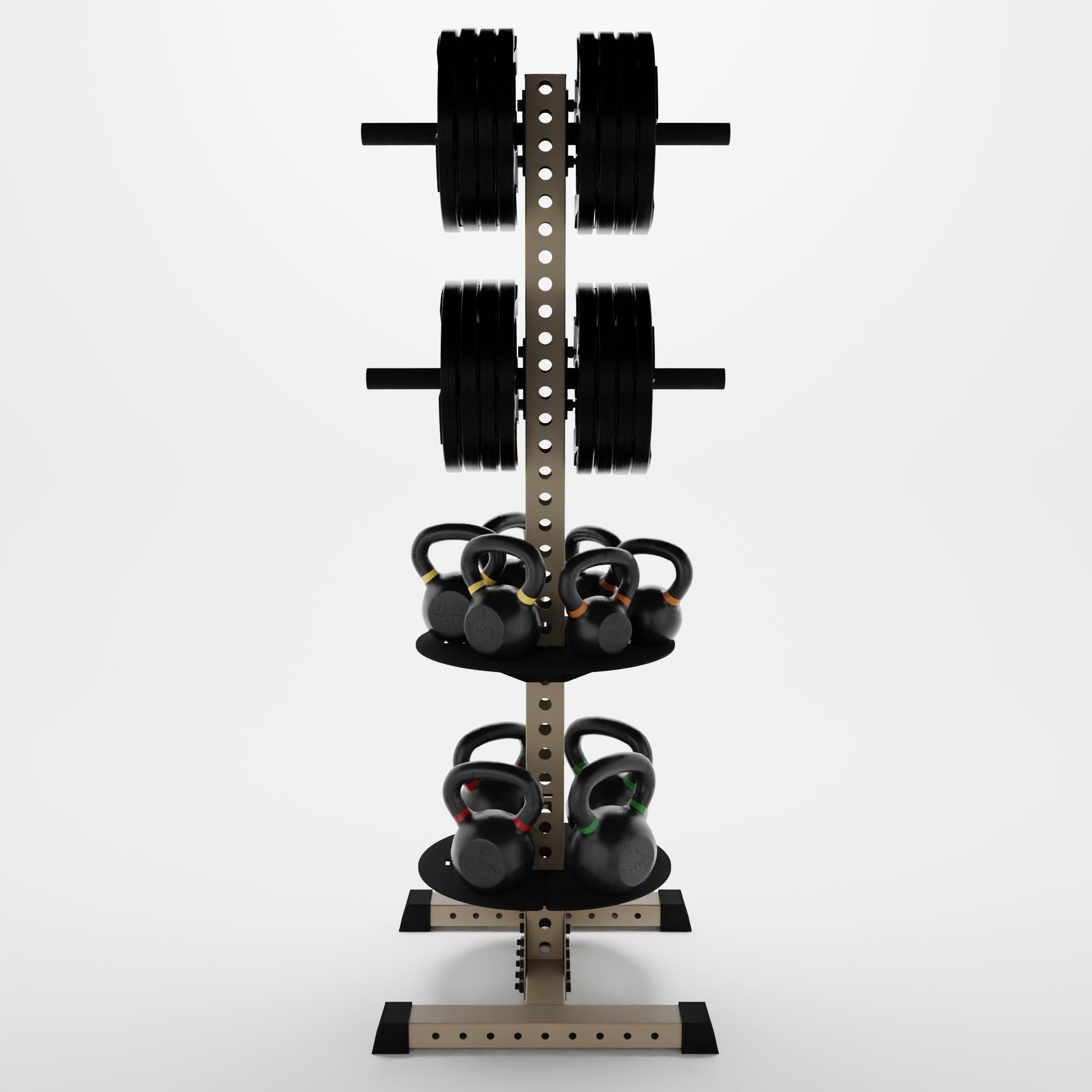
Our racks are compatible with attachments and accessories for extra storage and improved functionality. Attach weight plate and barbell holders for additional storage, or connect landmine and battle rope attachments, perfect for extra exercises during your workout routine. With our weight storage you can do more with your limited space.

Progressive Overload: Increasing Your Dumbbell Weight
A common challenge is reaching a point where your dumbbells feel too light for a compound movement. To continue building muscle (known as progressive overload), use these advanced techniques to ramp up the intensity:
-
Increase Time Under Tension: Slow down the lowering portion of the lift. Use a 4-second count on the way down for your leg workouts to maximize muscle growth.
-
Use Drop Sets: After your final heavy set, immediately drop the weight by 20–30% and perform as many reps as possible. This is a highly effective technique for growth.
-
Add Pauses: Introduce a 2–3 second pause at the most difficult point of the lift (e.g., the bottom of the squat or the deep stretch of the RDL).
-
Increase Range of Motion: Stand on a low block or plate while performing RDLs to allow the dumbbells to travel lower, increasing the stretch and stimulus on the hamstrings.
Conclusion: Build Your Base with Dumbbells
A leg dumbbell workout is a powerful tool, proving that high-quality, effective training is possible regardless of your space limitations. By focusing on fundamental dumbbell leg exercises, choosing the workout that aligns with your goal, and applying progressive overload, you can build a strong lower body.
Ensure your success by prioritizing safety and efficiency. Invest in smart, space-saving dumbbell rack solutions, like ours, that keep your weights organized, your floor clear, and your focus entirely on crushing your next set.